Is Walking Good for Lower Back Pain?
Walking helps many people with non-specific lower back pain, but dose and timing matter. Learn who benefits, how to start with 5–10 minutes, how to build to 30, and when leg symptoms mean you should stop.
By WellTao · Published: · Editorial Policy
More articles in this topicTable of contents
The short answer
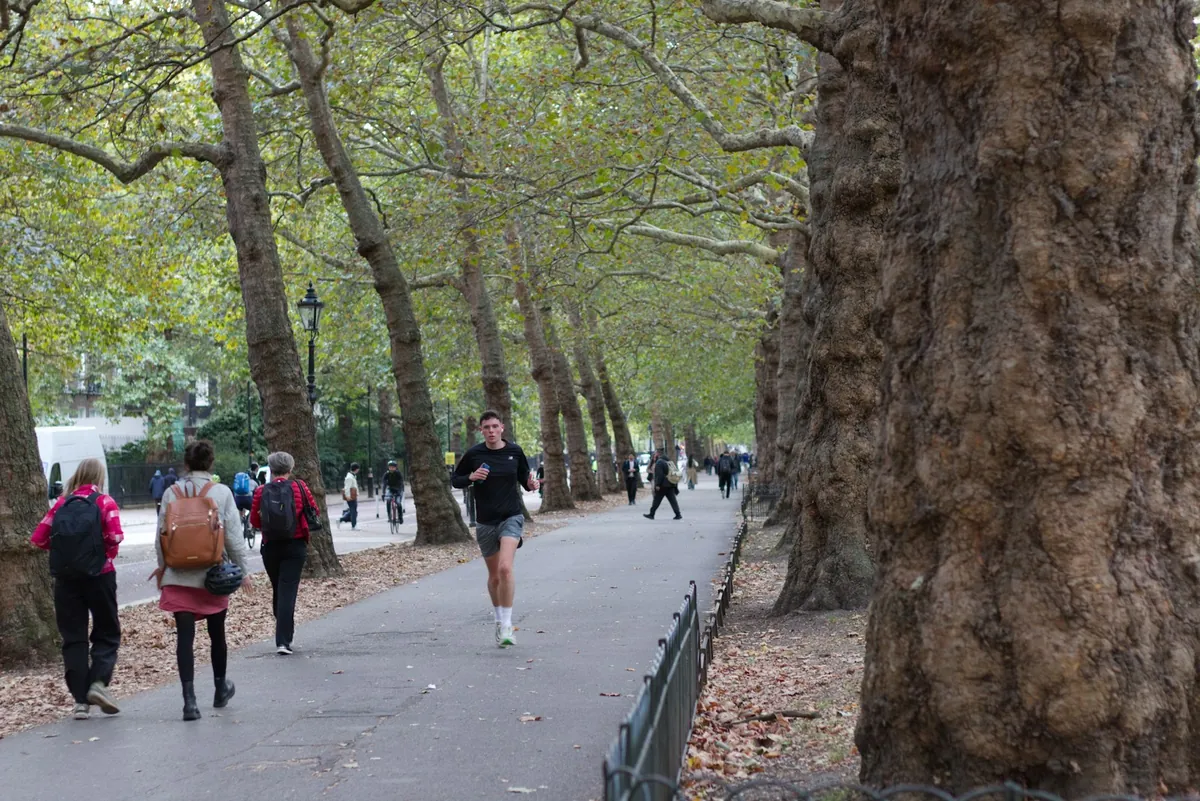
For most people with non-specific lower back pain, walking is worth doing. It is cheap, low-skill, and can improve back endurance, mood, and confidence. It may also reduce recurrence. The key is not “more steps is always better”; it is starting at a dose you can tolerate and increasing gradually. Walking tends to suit people whose pain is worse with prolonged sitting or stiffness and better with gentle movement. People with spinal stenosis or active nerve-root symptoms may need a different approach.
A practical starting point: 10–20 minutes a day, split into one or two walks, at a pace where you can speak in full sentences. If 10 minutes brings on leg numbness, heaviness, or a change in how you walk, reduce to 5 minutes or switch to seated/lying exercises and get assessed. Walking is not a way to “fix a disc.” It is more like regularly oiling the system that supports your back.
Who benefits—and who should adjust
Walking is a good mainstay if you:
- Feel stiff after sitting and loosen up when you move;
- Have pain mainly in the lower back or sacrum, without clear leg radiation;
- Are past the peak of an acute flare and can walk for at least 5 minutes;
- Want a low-intensity habit that is easy to sustain;
- Also want to improve sleep, mood, or weight management.
Adjust the plan or get assessed first if you:
- Develop buttock or posterior thigh aching, numbness, or heaviness after a few minutes of walking, and need to stop, bend forward, or sit to relieve it—this suggests neurogenic claudication, often from lumbar spinal stenosis;
- Have leg pain worse than back pain, or coughing worsens leg pain;
- Drag a foot, catch your toe, or need to stop frequently;
- Cannot stand upright during an acute flare, or walking clearly worsens the pain;
- Have fever, pain after trauma, or persistent night pain.
The simple rule: if walking leaves the back warm and looser, improves your mood, and does not leave you worse the next day, the dose is probably right. If it brings on leg numbness or leaves you stiffer the next day, the dose or type of movement is wrong.
Why walking helps
It changes the load instead of holding it still
Prolonged sitting keeps the lumbar spine and discs in a relatively fixed flexed position, with the back muscles working at a low level. Walking brings the hips, knees, and ankles into the picture. The back moves from static compression to dynamic loading, and muscles and fascia get repeated short contractions and relaxations. For people without nerve compression, this change in load often feels better than staying seated.
The evidence: helpful, not magic
A 2026 systematic review and dose-response analysis of walking for low back pain (PMID 42479922) found that walking can improve pain and function, but the programs varied widely and the optimal dose is still uncertain. The 2024 WalkBack trial published in The Lancet found that a physiotherapist-guided progressive walking program plus education lengthened the time to recurrence in people with a history of low back pain. This supports “walking is worth doing,” not “10,000 steps cures back pain.”
Walking builds tolerance
People with recurrent back pain are often not missing one specific muscle; they have a reduced overall capacity to tolerate load. They get tired after walking a certain distance or stiff after sitting a certain time. Progressive walking raises that capacity little by little, and it also improves sleep and mood. It does not target one muscle, but it makes daily activity less likely to cross the line.
Walking does not replace strength work
Walking mainly builds cardiovascular fitness and leg endurance. It gives limited stimulus to the hip extensors, gluteus medius, and deep spinal stabilizers. The ideal combination is walking plus hip and core strength training 2–3 times a week. Walking alone may not prepare you for lifting, prolonged standing, or twisting.
A traditional Chinese medicine view
Traditional theory values movement—“when qi and blood move, health follows”—but not at any cost. The usual guidance is to stop at a light sweat and slightly faster breathing, not at exhaustion. Walking to the point of heavy sweating, palpitations, or weak knees is traditionally seen as draining rather than nourishing. For back pain, walking belongs under “guiding and stretching,” not “treatment.”
Three common patterns:
- Qi stagnation and blood stasis: distending or stabbing pain after prolonged sitting, better with movement, worse with stress. Traditionally understood as qi not moving smoothly and blood becoming sluggish. Gentle, regular activity fits well.
- Phlegm-damp heaviness: the body feels heavy, the lower back feels weighted, and walking helps at first but becomes tiring. Traditionally understood as dampness obstruction. Short, frequent walks suit this pattern better than one long walk.
- Kidney-essence depletion: aching lower back and knees, feeling empty after walking, fatigue, night urination, or low energy. Traditionally understood as depletion. Reduce the dose, add strength work and sleep, and do not chase step counts.
These map one way to constitution tendencies: blood-stasis toward regular movement; phlegm-dampness toward short, frequent walks; Yang-deficiency toward warmth and avoiding long walks in cold, windy conditions. Constitution tendencies are for daily care only and cannot replace evaluation for spinal stenosis or nerve compression.
The evidence boundary: NCCIH notes that mind-body practices such as tai chi have a relatively stronger evidence base for some pain and balance outcomes, while acupressure and many other TCM approaches have mixed evidence. Walking is part of modern rehabilitation; it does not need a “secret TCM” story. Traditional theory is useful for noticing your own pace and recovery.
How to walk and how much
Find your baseline
For one week, record when your back feels best, how long you can walk before symptoms start, and how long it takes to recover. If you start to ache at 15 minutes and recover after 10 minutes of rest, your starting dose is 10–12 minutes, not a forced 30.
Dose and frequency
- Frequency: about 5 days a week, at least every other day. Daily is not required.
- Duration: start with 5–10 minutes; increase by 10%–20% a week; build toward 20–30 minutes.
- Intensity: you can speak in full sentences and feel slightly warm, not breathless.
- Splitting: two 10-minute walks are fine if 20 minutes at once is uncomfortable.
- Surface: flat, forgiving paths first. Avoid hills, stairs, or loaded walking at the start.
- Shoes: supportive and comfortable; avoid completely flat or very soft shoes for long walks.
Walking form
Look 3–5 meters ahead, not at your feet. Keep a natural stride, relax the shoulders, and let the arms swing. Gently engage the abdomen without holding your breath. On an incline, lean slightly from the hips, not by arching the lower back.
After the walk
Walk slowly for 2 minutes and stretch the calves against a wall for 20–30 seconds each side. Avoid sitting for more than an hour right after. Record how long you walked, whether you had leg symptoms, and whether you were worse the next day.
Stop if you notice
- Leg numbness, weakness, or dragging;
- Pain spreading from the back to the calf or foot;
- Chest pain, shortness of breath, or dizziness;
- Pain that is clearly worse the next day and lasts more than 24 hours.
Traditional self-care
Walking is the main practice; the rest supports recovery.
Acupressure
Use your thumb after the walk for about 60 seconds per point, aiming for a mild ache.
ST36 (Zusanli) Location: about four finger-widths below the outer knee, one finger-width outside the shin bone. Traditional use: traditionally used to support digestion, energy, and leg strength. Avoid over broken skin or inflamed veins.
BL57 (Chengshan) Location: on the back of the calf, at the top of the “V” formed when you rise onto your toes. Traditional use: used for calf tightness and referred back-leg ache. Press gently.
BL23 (Shenshu) Location: about two finger-widths beside the spinous process of the second lumbar vertebra. Traditional use: associated with the lower back; used for aching or cold-type pain. Do not press hard during pregnancy or over broken skin.
Food
Eastern-style options:
- Astragalus and yam porridge: 10 g astragalus in a cloth bag, 100 g yam, and 50 g rice simmered in 800 ml water for 40 minutes; remove the bag. Traditionally used for tiredness and shortness of breath. Skip during fever or a sore throat. Use herbs under professional guidance.
- Black bean and walnut porridge: 30 g black beans soaked for 4 hours, 15 g walnuts, and 40 g rice simmered for 40 minutes. Traditionally warming; suits aching, cold-prone backs.
- Chenpi and job’s tears water: 3 g dried tangerine peel and 20 g roasted job’s tears simmered in 500 ml water for 20 minutes. Traditionally used for dampness. Avoid job’s tears during pregnancy.
Western-style options:
- Banana oatmeal: 50 g oats cooked in 250 ml milk or water, topped with half a banana and 10 g walnuts. A practical breakfast on walking days.
- Egg and whole-grain sandwich: 2 slices whole-grain bread, 1 egg, lettuce, and tomato, eaten 1–2 hours before a walk.
- Lentil vegetable soup: 50 g red lentils, carrot, celery, and tomato simmered for 25 minutes. A lighter dinner after a walk.
Mind and emotions
Do not turn step count into a KPI. A 3,000-step day followed by an 8,000-step day is normal. Walk with someone if it helps you stay consistent, but keep a pace that lets you breathe. Rate your mood and back symptoms 0–10 after the walk; that is more useful than distance alone.
Movement
Alternate 1 minute of brisk walking with 2 minutes of easy walking for five cycles. Add wall sits for 20–30 seconds, 2–3 sets, and glute bridges for 10–15 repetitions, 2 sets. Tai chi for 20–30 minutes twice a week can help balance and relaxation; reduce the squat depth if your knees complain.
Routine
Keep a regular walking time, such as 30–60 minutes after a meal or in the afternoon. Stand up every 45 minutes during the day. Reduce the dose when sleep is poor. In cold or windy weather, walk indoors and keep the lower back covered.
An 8-week walking plan
| Week | Frequency | Session length | Goal |
|---|---|---|---|
| 1 | 3–4 days | 5–10 minutes | Find a pace that does not worsen leg pain |
| 2 | 4 days | 10–12 minutes | Finish 10 minutes without lingering pain |
| 3 | 4–5 days | 12–15 minutes | Add 1-minute brisk intervals |
| 4 | 4–5 days | 15–20 minutes | Speak in full sentences, light sweat |
| 5 | 5 days | 20 minutes | Add a gentle incline or pace changes |
| 6 | 5 days | 20–25 minutes | No clear worsening the next day |
| 7 | 5 days | 25–30 minutes | Add strength training twice a week |
| 8 | 4–5 days | 25–30 minutes | Make it a sustainable habit, not a step target |
Progression rule: only add 2–5 minutes after two consecutive walks with no clear worsening. If leg numbness, heaviness, or a change in gait appears, go back to the previous week.
How long improvement takes
- 1–2 weeks: you may notice easier breathing, better mood, and less stiffness before the pain score changes.
- 4–6 weeks: back endurance and the time you can sit or walk often start to improve.
- 8–12 weeks: with strength work, recurrence and the “I ache after walking” threshold are more likely to improve.
- No improvement: check dose, shoes, surface, and nerve symptoms rather than deciding “walking is not for me.”
Walking is a long-term habit, not a 3-day challenge. Eight consistent weeks are worth more than 10,000 steps in week one.
When to see a doctor
- Leg numbness, heaviness, or the need to stop and bend forward or sit while walking—assess for lumbar spinal stenosis;
- Leg pain with weakness, foot drop, or a dragging gait;
- Changes in bladder or bowel control, groin numbness, or weakness in both legs—seek emergency care;
- Fever, pain after trauma, persistent night pain, or weight loss;
- Chest pain, shortness of breath, dizziness, or arm symptoms while walking—check the heart and lungs first;
- Pain that worsens week by week and does not respond to rest or reduced load.
This article is health education, not a diagnosis or individual medical advice. If you have heart disease, severe knee arthritis, osteoporosis, or balance problems, talk to a doctor or physical therapist before starting a walking program.
Common questions
Can I walk 10,000 steps a day with lower back pain?
Step count is not a prescription. For some people, 10,000 steps is fine; for others, 5,000 is already too much. The more reliable signs are whether you are worse afterward and whether you recover by the next day. Start with 10–20 minutes and build gradually rather than chasing a universal number.
My back hurts more the longer I walk. Should I keep going?
First distinguish a warm, mild ache from leg numbness, heaviness, or shooting pain. The former may allow a reduced dose; the latter means stop and get assessed. “Push through the pain” does not apply to nerve symptoms.
To settle an acute flare first, read how to relieve lower back pain fast. To add strength work, see how to strengthen lower back muscles at home. For the full framework, visit the back pain hub.
What else does your recovery need?
The same 20-minute walk can loosen one person and drain another. A free constitution quiz shows your relative tendencies across nine traditional patterns, so you can combine movement with warmth, food, and routine more thoughtfully. Results are for self-observation, not medical diagnosis.
References7 sources
- 01
- 02
- 03
National Institute for Health and Care Excellence (NICE)
- 04
World Health Organization (WHO)
- 05
National Health Service (NHS)
- 06
National Center for Complementary and Integrative Health (NCCIH / NIH)
- 07
Evidence-Based Complementary and Alternative Medicine (PubMed)
Personalized guidance
Use the app for constitution-friendly ideas and structured plans when available.
Download the App
Get personalized TCM health recommendations