acupoint
Zusanli (ST36): Location and Limits of Wellness Claims
Locate the traditional ST36 point using leg landmarks, understand the meaning of cun, and separate wellness claims from evidence.
By WellTao · Published: · Last updated: · Editorial Policy

Location
On the front-outer lower leg, 3 proportional cun below the outer knee depression and about one finger-width outside the tibial crest
Function
Traditional point reference; longevity and immunity benefits are not established by the location
Where is ST36?
Zusanli is on the front-outer part of the lower leg. Its traditional position is three proportional cun below the outer depression beside the kneecap, about one finger-width lateral to the front ridge of the tibia. The anatomical location appears in appendix B.4.2 of GB/Z 40893.4—2021. Only that location is cited here, not the document’s paediatric treatment programme.
A body-based cun is not a fixed ruler measurement. A picture also cannot account for every person’s proportions. If the landmarks are unclear, a qualified practitioner can demonstrate them without pressing hard or using a needle.
Does knowing the point establish a health benefit?
No. Traditional teaching often discusses ST36 in relation to digestion and general wellbeing. That is not evidence that daily pressure boosts immunity, treats abdominal illness or extends life. A name such as “Leg Three Miles” is not a measurable performance claim.
NCCIH’s acupuncture summary concerns defined professional interventions for particular conditions. It should not be used to advertise a universal home wellness routine or to infer that pressure and needle stimulation are equivalent.
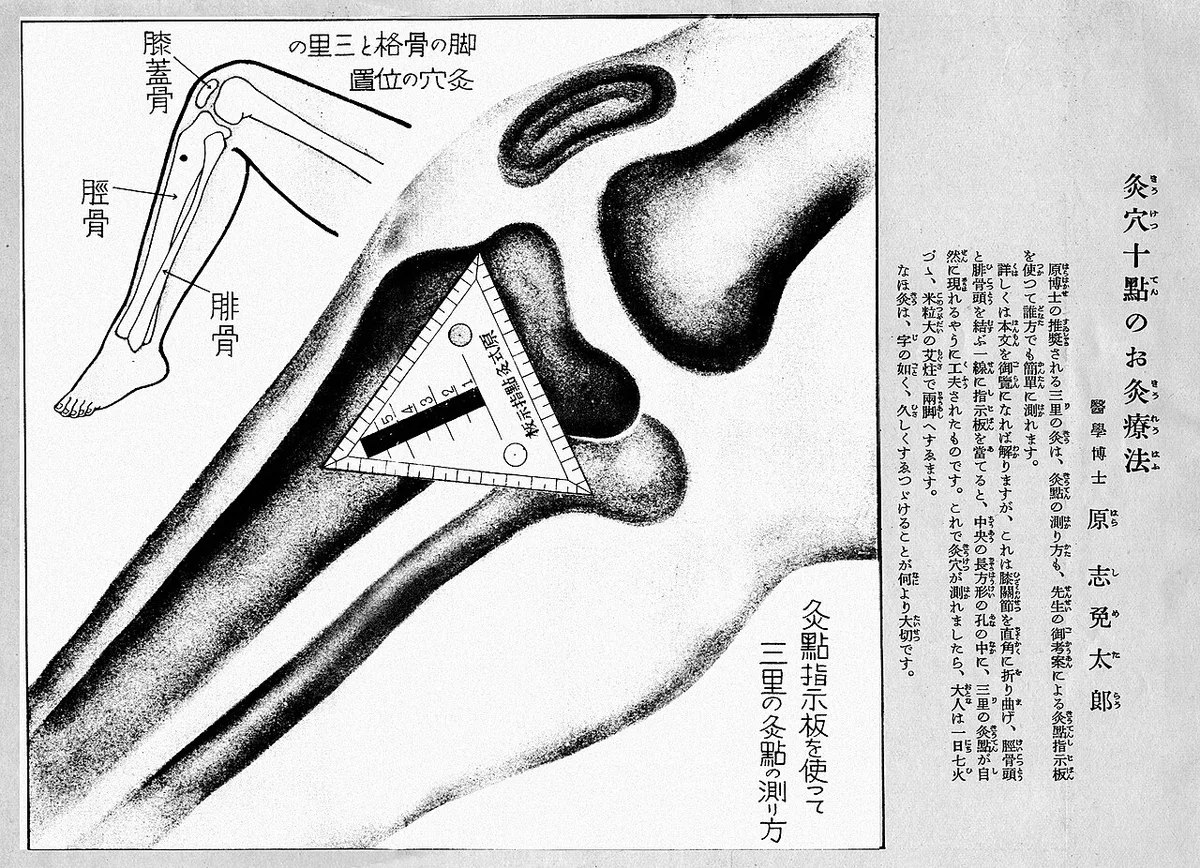
What does the historical picture show?
The illustration records an earlier way of locating the point using a measuring aid. Its historical interest does not make it a modern treatment guide. Do not copy burning, needling or prolonged stimulation from an old image. Avoid pressing injured skin or a swollen, unexplained painful leg.
What if fatigue is the reason for looking up ST36?
Give the fatigue its own assessment. The NHS guidance on tiredness explains when ongoing fatigue should be checked. Record its duration, effect on daily life, sleep and other symptoms. Those details help determine the next step; tenderness at a traditional point does not diagnose “weak digestion” or explain why you feel exhausted.
References3 sources
- 01
国家标准化指导性技术文件 / 中华中医药学会公开文本
- 02
- 03
NCCIH / NIH
Download the App
Get personalized TCM health recommendations