Why Am I So Tired After Doing Nothing? The Mechanisms and the Fix
Feeling exhausted after doing nothing all day is real, not laziness. From use-it-or-lose-it fitness and sleep pressure to screen drain and the Chinese medicine idea that lying too long weakens qi, here's why rest backfires, plus a rest-day log and a practical restart plan.
By WellTao · Published: · Last updated: · Editorial Policy
More articles in this topicTable of contents

The Short Version
If you’ve caught yourself asking “why am I so tired after doing nothing,” the tiredness is real, and it isn’t laziness. “The more I rest, the worse I feel” has clear mechanisms. A body isn’t a battery that charges when you leave it alone; it works more like a machine that has to keep running to stay in shape. Move too little for long enough and your fitness reserve genuinely shrinks. Spend the day in bed on your phone and you scramble your sleep rhythm while racking up hours of mental work. When rest is done the wrong way, rest itself becomes draining.
This article does two things: help you tell the kind of tired that a good rest fixes from the kind that no amount of rest touches, then give you a starter plan for going from “not moving” to “moving.” One thing first: if your fatigue has lasted more than two weeks, doesn’t lift at all after rest, or comes with a persistently low mood, noticeable weight change, or other symptoms, skip ahead to when to see a doctor. That kind of tired isn’t something lifestyle changes can solve.
Which Kind of Tired Is Yours
The same complaint covers two different problems, and they call for opposite responses:
| Tired that rest fixes | Tired that rest doesn’t fix | |
|---|---|---|
| Typical picture | A busy stretch ends, you spend one weekend day horizontal, Monday you’re back | Rest doesn’t refresh you, and it’s like this every day |
| Duration | Recovers on its own within a few days | Lasts two weeks or more |
| What else shows up | Sleepiness and not wanting to move, nothing else | Low mood, loss of interest, feeling cold, weight change, unusual sleepiness |
| What to do | Fix how you rest (the rest of this article) | Get it checked promptly |
If you’re in the left column, your problem is most likely the quality of your rest, and that’s what we’ll take apart below. If you’re closer to the right column, skip the self-care sections and go straight to when to see a doctor.
One more distinction worth keeping, from the U.S. National Institutes of Health’s MedlinePlus: fatigue and drowsiness are two different things. Drowsiness is wanting to sleep; fatigue is running short on energy and motivation. They often arrive together, but they come from different places. The groggy, wrung-out state after a day of scrolling in bed is usually both at once, from two separate sources.
What Modern Medicine Says
Feeling tired after doing nothing all day sounds like a contradiction. Taken apart, it’s several mechanisms stacking up.
Fitness is use it or lose it
Move too little for long enough and the body goes through “deconditioning”: muscle mass drops, the mitochondria inside your muscles (the cell’s power plants) work less efficiently, and your heart and lungs deliver oxygen less well. The same everyday tasks, stairs, groceries, walking, then cost more effort than they used to, and more effort spent means you tire sooner. The World Health Organization lists physical inactivity among the leading risk factors for chronic disease and stresses that any amount of activity beats none; conversely, the more time spent sitting or lying, the worse the health outcomes. This is a slow process you don’t feel happening, until one day you notice you’re exhausted and can’t point to anything you did.
Lying around too long scrambles your sleep rhythm
Sleepiness comes from “sleep pressure”: while you’re awake, your brain steadily builds up a substance called adenosine, the more of it, the sleepier you get, and sleep is what clears it. Sleeping until noon on Saturday and adding a long afternoon nap is like making repeated early withdrawals: by the time night comes, there isn’t enough pressure left to fall asleep, so you wake up even later the next day and the whole rhythm slides back. The CDC’s first sleep tip is to go to bed and get up at the same time every day, and the NHLBI counts “sleeping at the wrong time” as a form of sleep deficiency in its own right. Catch-up sleep taken too far doesn’t repay the debt.
Long daytime naps wake you up groggier
Being woken out of deep sleep produces “sleep inertia,” a heavy, foggy state that can last anywhere from ten minutes to a couple of hours. Once a daytime nap runs much past half an hour, you’re likely to dip into deep sleep and wake up foggier than before you lay down. That’s why an afternoon nap can leave you feeling hungover.
Scrolling is not rest; it’s another shift
This is the easiest one to miss. Mental fatigue and physical fatigue are separate things: your body didn’t move, but your brain spent hours processing hundreds of short videos, messages, and micro-decisions (watch or skip, tap or not, reply or not). That kind of rapid, fragmented, attention-switching input is a high cognitive load, and it burns the same attention and emotion-regulation resources as work. The tiredness after “a whole day in bed on my phone” is the tiredness of a brain that worked a full shift, just with a pillow for a desk.
Boredom itself burns energy
MedlinePlus lists boredom among the common causes of fatigue. With no goal and no stimulation, the motivation system idles: not consuming nothing, but spending itself in the standoff of “I don’t want to do anything.” That’s why a packed, purposeful weekend can leave you energized while a completely empty one leaves only flatness.
Sometimes tiredness is a signal
The other side has to be said plainly: feeling exhausted after doing nothing is sometimes an early sign of illness. MedlinePlus lists anemia, depression, and thyroid disorders among the common causes of fatigue, and the CDC confirms fatigue as a common Long COVID symptom that can persist for months after infection. The telling clue: lifestyle tiredness eases once you get moving and sleep properly; illness tiredness doesn’t budge no matter how you rest, and it usually brings company (low mood, feeling cold, weight change). The NHS puts it bluntly: if fatigue isn’t relieved by rest and sleep, see a doctor.
How Chinese Medicine Understands It
Chinese medicine isn’t surprised by “the more you rest, the more tired you get”; it wrote the idea down about two thousand years ago. What follows is the traditional framework, an empirical model rather than a diagnosis in the modern medical sense.
The Suwen, part of the Yellow Emperor’s Inner Classic, lists five “strains” in its “Xuanming Wuqi” chapter: “Prolonged looking injures the blood, prolonged lying injures the qi, prolonged sitting injures the flesh, prolonged standing injures the bones, prolonged walking injures the sinews.” Notice the two right after looking: lying too long injures qi, sitting too long injures the flesh. The tradition never held that more rest is always better; any single posture stretched too long becomes a strain of its own.
Why would lying and sitting wear you out? The key term is the movement of qi. Qi (roughly, the body’s functional energy) is meant to circulate, and its flow is pushed along by physical activity. When it moves freely you feel clear and capable; when it stalls you feel heavy and dull. Hours of lying or sitting slow the flow, the qi “jams,” and what you experience is the loop of lying down, sinking deeper, and wanting to move even less. This and the modern “use it or lose it” observation are two languages describing the same thing.
In the traditional view, this kind of “rest-earned tiredness” shows up in three common patterns (they can mix and shift; none of them is a diagnosis):
Drained and flat: the body feels heavy, you keep wanting to lie down, talking feels like an effort, slight exertion brings weak sweating, appetite is so-so. Traditionally this is read as qi running low, and it often appears alongside a qi-deficiency constitution tendency; people with that tendency feel the “battery at two percent” sensation more strongly after long stretches in bed.
Restless and unmotivated: the body isn’t weak, but nothing gets started; the chest feels tight, sighs come easily, and boredom tips straight into irritation. Traditionally this reads as qi getting stuck, and it often appears alongside a qi-stagnation constitution tendency. What this kind of tired lacks isn’t rest; it’s an outlet.
Heavy and foggy: the head feels wrapped, the body feels like it’s wearing wet clothes, no amount of sleep is ever enough, the tongue coating runs thick. It’s most common in people who eat rich, greasy food and rarely move, and traditionally it’s read as phlegm-dampness sitting in the way. It often appears alongside a phlegm-dampness constitution tendency.
Traditional accounts also discuss tendencies using categories such as the nine TCM constitution types. These are classifications within the traditional framework, not validated predictions of symptoms or explanations of a medical cause. A few episodes, a clock time or a quiz result cannot establish a diagnosis. Persistent symptoms need medical assessment; any TCM pattern needs individual practitioner assessment. See the NCCIH overview for research and safety limits.
How to Rest and Get Moving Again
Resting well is about matching, not amount: move when the body needs movement, and genuinely switch off when it needs recovery. The parameters below can be followed exactly as written:
- Cap naps at 20 minutes. Set an alarm. Within 20 minutes you stay in light sleep and wake clear; past that you risk deep sleep and an hour or two of sleep inertia. No catch-up naps after 3 p.m.
- For every hour lying or sitting, get up for 5 minutes. Water, a stretch, two laps of the room all count. This one habit interrupts the “prolonged sitting” buildup directly, and it’s the smallest dose that works against deconditioning.
- Keep weekend wake time within 1 hour of your weekday time. Up at 7:30 on weekdays means 8:30 at the latest on weekends. Wake time is the strongest anchor you have for your body clock; a two-hour lie-in is a self-inflicted weekly jet lag.
- Get daylight within 30 minutes of waking. Open the curtains or step outside for a few minutes. Morning light is the strongest clock-setting signal there is, and it pulls a delayed rhythm back earlier.
- Use the 5-minute rule to start. Not wanting to move is normal, so don’t wait to “feel motivated first”; motivation shows up after you start, not before. Promise yourself only 5 minutes: shoes on, walk for 5 minutes, or move in place for 5 minutes. You’re allowed to stop after 5, but most of the time you’ll keep going. A low enough threshold is what makes starting actually happen.
- Schedule one small purposeful thing for a rest day. Cook a meal, visit a market, walk with a friend. Boredom itself burns energy, and one small task gets the motivation system out of idle.
- Move the phone, don’t fight it with willpower. When you want real rest, leave the phone in another room and reach for a paper book, music, or plain daydreaming instead. Scrolling is mental work, not rest; the mechanism is covered above.
TCM Methods
The five categories below answer to the three patterns above. Start with the easiest one or two; nobody needs to do all five.
Acupressure and Self-Massage
Press with the pad of a finger, firm enough to feel a mild, bearable soreness, 30–60 seconds per point. Daytime works better.
Zusanli (ST36) Location: about four finger-widths below the outer hollow under the kneecap, one finger-width outside the front crest of the shinbone. Traditional use: the most-used strengthening point in the tradition, for the drained, flat type with weak appetite. 60 seconds per leg.
Taichong (LR3) Location: on the top of the foot, in the groove between the big toe and second toe; slide up along the groove until it dips. Traditional use: traditionally unblocks stuck qi and eases constraint; suits the restless, unmotivated type. 60 seconds per foot.
Sanyinjiao (SP6) Location: four finger-widths above the tip of the inner ankle bone, just behind the inner edge of the shinbone. Traditional use: traditionally tied to the Liver, Spleen, and Kidney channels; suits the heavy, foggy direction. 60 seconds per leg. Do not use during pregnancy.
The three points answer to the three directions, so pick the one matching your main pattern and stay with it; there’s no need to press all three. During pregnancy, keep only Zusanli and set the other two aside.
Food Therapy
Chinese home-style track:
- Chinese yam and millet congee: about 100 g of Chinese yam (a mild, starchy white root, sold fresh at Asian supermarkets as shanyao or sometimes nagaimo), cut into chunks and simmered with foxtail millet (sold as millet at Asian grocers, health-food stores, or online) into a soft porridge, eaten as breakfast. Traditionally the yam supports digestion and bolsters qi; it suits the drained, flat type. (This is a food-therapy use; if you intend to use it as a medicinal herb, consult a licensed TCM practitioner first.)
- Tangerine peel tea: 3–5 g of dried tangerine peel (chenpi, sold in packets at Asian supermarkets, Chinese herbal shops, or online) steeped in freshly boiled water and sipped as tea. Traditionally it moves qi, resolves dampness, and wakes up digestion; it suits people who feel heavy and foggy with a thick tongue coating.
- Regular meals beat supplements. Erratic eating is hardest on the digestion, and digestion is where traditional theory says qi and blood are made. When you’re tired, get three meals onto a schedule first, then think about anything else.
- Cut back on the weekend revenge eating: fried food, heavy sweets, and alcohol all feed the dampness direction in traditional terms and deepen the fog.
Western everyday track:
The same direction, landed with ingredients from any American or British supermarket:
- Pumpkin oatmeal: 50 g rolled oats and about 150 g pumpkin cut into chunks, simmered together in water until soft, eaten as breakfast. Both ingredients are gentle and easy to digest, and the bowl takes the same slot as the Chinese yam congee; it suits the drained, flat type.
- Sweet potato and eggs: one sweet potato (about 200 g), steamed or baked, with 1–2 boiled eggs as the staple of lunch. Sweet potato is traditionally kind to digestion and the eggs add quality protein; it holds you far better than weekend fried chicken.
- Red lentil and vegetable soup: 80 g red lentils with a carrot and a celery stalk, simmered about 25 minutes and salted to taste. Soft, light, and easy on the system; when you feel heavy and foggy it beats a greasy takeaway, working the same “lighten the load” direction as the tangerine peel tea.
- Ginger and jujube tea: 3 slices of fresh ginger and 2–3 dried jujubes (red dates, sold at Asian grocers or online), split open, simmered in about 500 ml of water for 10 minutes; sip warm, with a little honey if you like. It’s on the warming side and suits cold hands and a flat appetite after long stretches of sitting; that warming direction also tends to fit people with a yang-deficiency constitution tendency, who run cold.
The logic is the same across both tracks: the yam congee leans toward shoring up qi and suits the drained direction; the tangerine peel tea leans toward moving qi and drying dampness and suits the heavy, foggy direction; the oatmeal and ginger-jujube tea are likewise gently warming, and the lentil soup is the light, draining option. If your pattern is the restless, unmotivated one, food isn’t your main lever; the next section is.
Emotional Care
For the restless, unmotivated type, the core problem isn’t a body short of energy; it’s emotion with no exit. Traditional practice talks about “smoothing the Liver,” which in plain modern terms means giving emotion a real outlet: a walk outside, an actual conversation, writing it down, anything that moves it out. And one reminder: don’t scold yourself for being lazy because a day in bed left you tired. Self-blame presses the qi down further, and you know by now that this state has clear mechanisms and a clear way out. This section matters most for the stuck-qi direction, but it applies to everyone; self-blame and bottling things up are extra costs for any constitution.
Movement and Exercise
If ordinary activity causes delayed worsening lasting days, stop increasing exercise and seek assessment. Persistent unexplained fatigue or fatigue affecting daily life warrants an appointment now; a self-care trial is not a prerequisite. See the fatigue topic’s care guidance.
The point here isn’t exercise itself; it’s building stairs low enough to climb from “not moving at all” to “moving”:
- Weeks 1–2: a 10-minute walk outside every day. Speed doesn’t matter; leaving the building counts as done. The WHO’s principle is that any amount of activity beats none.
- Weeks 3–4: build to 20–30 minutes, or split it into two sessions. A light sweat while still being able to talk is the right intensity.
- After that, add a traditional practice: a full round of Baduanjin (Eight Pieces of Brocade, a set of eight slow, gentle exercises) takes about 12 minutes and suits mornings right after getting up; tradition holds it gets qi and blood moving, which is exactly what long lying and sitting block. Tai chi also has modern research support for balance and mood (per NCCIH).
- Cautions: if you haven’t exercised in a while, muscle soreness in the first few days is a normal response; just build gradually. If you have heart disease, or you feel chest tightness or pain during exercise, talk to a doctor before starting.
The staircase works for all three directions: the heavy, foggy direction should push on to a light sweat, the drained direction starts at the 10-minute floor, and the restless direction does best walking outdoors, where the emotion gets its outlet at the same time.
Sleep and Daily Rhythm
- Fixed wake time, weekend drift under an hour. Same advice as the modern section, and no accident: the traditional “orderly daily life” and modern circadian science meet at exactly this point.
- In bed by 11 p.m. where possible. The debt from staying up late isn’t repaid by lying in the next morning; lying in only pushes the clock later.
- Naps capped at 20 minutes, as above. The traditional midday rest was always a short one, and “prolonged lying injures the qi” covers long daytime sleep too.
Fixed wake time and the nap cap apply regardless of constitution. People in the heavy, foggy direction especially need to hold the 20-minute nap line, because long daytime sleep adds to the heaviness.
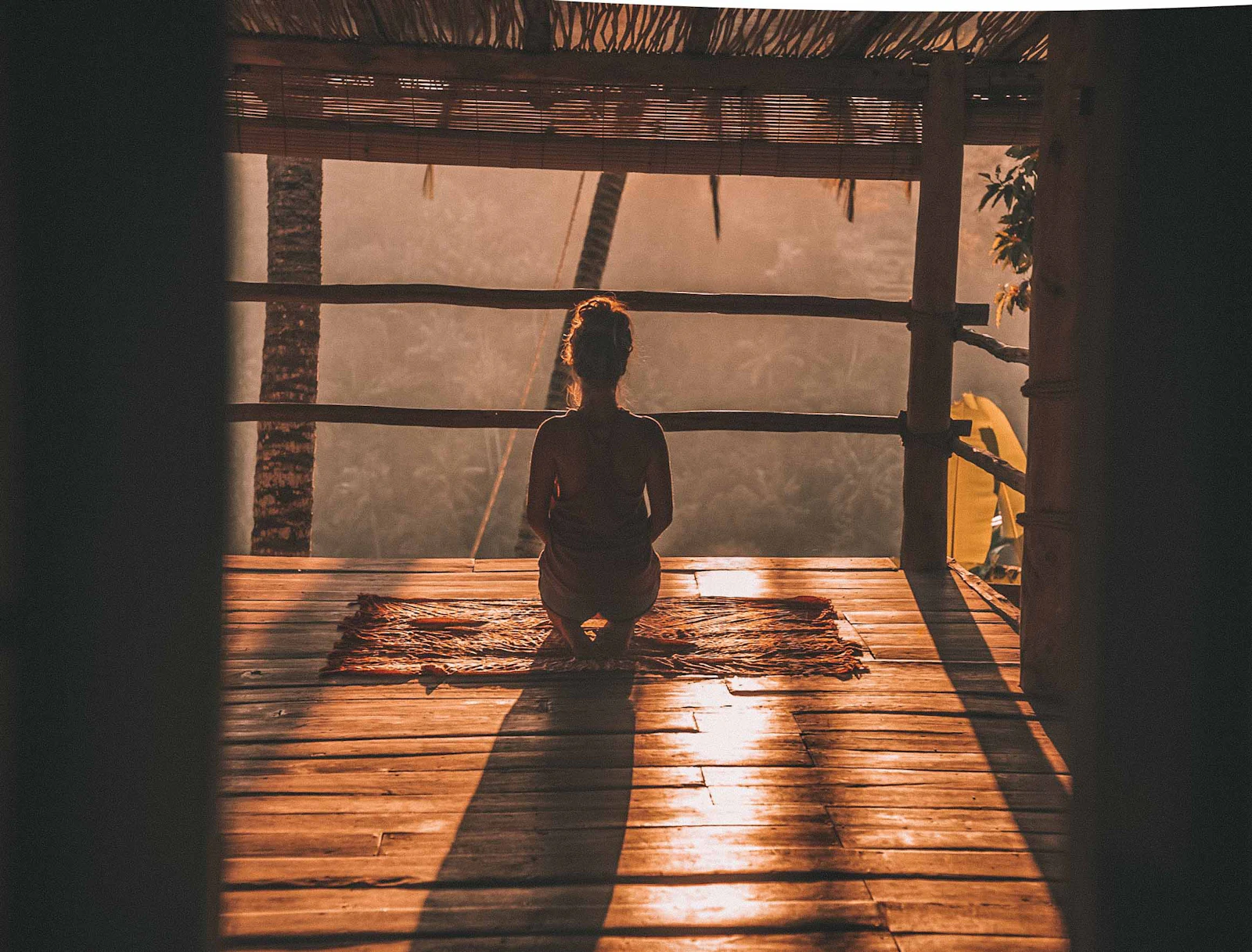
The three patterns map onto constitution tendencies in a steady direction: people with a qi-deficiency tendency are more prone to the drained, flat pattern, while the restless pattern tracks the stuck-qi direction and the heavy, foggy pattern tracks the phlegm-dampness direction. If you’d like to know which way you lean, the free constitution test below is a self-observation tool: it shows your tendencies across the nine types and helps you choose where to start. It’s an observation reference, not a medical diagnosis.
A Rest-Day Observation Log
Track two weekends in a row and you’ll see what your “rest” actually consists of. Before bed each day, take two minutes to note five things:
| What to record | Example |
|---|---|
| Roughly how long you lay or sat | 10 hours in bed, 3 on the sofa |
| Screen time (check your phone settings) | 7 h 20 min |
| Whether you got outside and saw daylight | No / 15-minute walk downstairs |
| Nap length and morning wake time | 1.5-hour nap, up at 11 a.m. |
| Your energy right now (1–10) | 4 |
After two weeks, compare: were the high-energy days the ones with shorter screen time and less time horizontal? Were the days you went outside clearly better? Your own log tells you what to change first, and for most people the answer is sitting in the screen-time and “got outside” columns.
How Long Until You See Improvement
Use the dates in your plan as review points, not promises of recovery. Responses to sleep, food and activity changes depend on the cause of fatigue and your circumstances. There is no established recovery timetable for the acupressure or food-therapy suggestions here.
- Review your notes weekly: compare sleep, daytime energy and the effects of activity. One better day does not identify a cause.
- Watch for delayed worsening: if ordinary activity brings a marked decline hours to a day or two later that lasts for days, reduce the load, stop increasing activity and seek assessment. Do not push through a fixed exercise plan.
- Arrange care when needed: unexplained fatigue lasting weeks or affecting daily life warrants a medical appointment. Do not wait to complete a diary or self-care trial; worsening symptoms or the warning signs below need earlier attention.
See NHS advice on fatigue and CDC guidance on post-exertional malaise.
When to See a Doctor
Self-care suits the kind of tired that rest can fix. Get a professional evaluation first if any of the following apply:
- Fatigue lasting more than two weeks with no relief from rest and good sleep; both the NHS and MedlinePlus list this as a reason to see a doctor;
- Fatigue with a persistently low mood or loss of interest in everything for more than two weeks; one of depression’s most common faces is exactly this “no amount of rest helps” tiredness;
- Fatigue with pale complexion, racing heart or shortness of breath, clear weight loss, unusual sensitivity to cold or heat, or persistent low-grade fever or night sweats; anemia and thyroid problems need ruling out;
- Daytime sleepiness severe enough to affect work, or loud snoring with waking up gasping; sleep apnea needs excluding;
- Fatigue persisting more than three months after a COVID-19 infection; that fits the Long COVID time pattern, and a doctor can help you build a management plan.
This article is general health education and can’t replace a doctor’s diagnosis or individualized advice. If you’re taking medication or managing a chronic condition, talk to your doctor before starting any new exercise or self-care routine.
For the bigger framework on when tiredness calls for replenishing and when it calls for moving, read how to stop feeling tired all the time; for a systematic look at fatigue that rest doesn’t relieve, see the fatigue hub and why you’re always tired and have no energy; and for the constitution framework itself, start with the nine TCM constitution types.
Rest isn't fixing it. Which way does your body lean?
Feeling drained and flat, wound-up and restless, or heavy and foggy after a day of rest point toward different starting points in traditional Chinese medicine. The free constitution test shows your tendencies across nine traditional body types and helps you choose where to begin. It's a self-observation tool, not a medical diagnosis.
References8 sources
- 01
World Health Organization (WHO)
- 02
UK National Health Service (NHS)
- 03
U.S. National Institutes of Health MedlinePlus
- 04
U.S. Centers for Disease Control and Prevention (CDC)
- 05
U.S. National Heart, Lung, and Blood Institute (NHLBI / NIH)
- 06
U.S. Centers for Disease Control and Prevention (CDC)
- 07
U.S. National Center for Complementary and Integrative Health (NCCIH / NIH)
- 08Huangdi Neijing: Suwen, "Xuanming Wuqi" chapter (The Yellow Emperor's Inner Classic: Basic Questions)
Classic of Chinese medicine, ~2nd century BCE
Personalized guidance
Use the app for constitution-friendly ideas and structured plans when available.
Download the App
Get personalized TCM health recommendations