Why Am I Always Tired and Have No Energy?
Constant tiredness and low energy rarely come from one single cause. Sleep, stress, food, and inactivity stack up, but so can anemia, thyroid problems, blood sugar, and depression. The mechanisms, the self-check clues, a one-week fatigue log, the TCM patterns, and the clear line for seeing a doctor.
By WellTao · Published: · Last updated: · Editorial Policy
More articles in this topicTable of contents

The Short Version
If you’ve been asking yourself why you’re always tired and have no energy, the most common explanation isn’t one serious disease. It’s several smaller things stacked together: too little sleep or sleep that isn’t deep enough, a stress system that never powers down, meals that send your energy supply up and down, and a body that moves too little. Fatigue is a symptom, not a diagnosis in itself. It can come from lifestyle, and it can also be a signal from anemia, thyroid problems, blood sugar, depression, or sleep apnea. Telling the two apart is straightforward: work through the checklist in this article, log your days for one to two weeks, and fix the cheapest items first. If 2 to 4 weeks of honest adjustment changes nothing, it’s time for a blood count, thyroid function, blood glucose, and ferritin.
A few kinds of tired you don’t push through on your own: unexplained weight loss, persistent fever, chest pain, shortness of breath, visible paleness with a racing heart, or a low mood lasting more than two weeks. The full list is in the when-to-see-a-doctor section.
Which Kind of Tired Are You
Feeling drained for a few days is normal. Two late nights or one brutal project, and you catch up over the weekend. The kind worth taking seriously looks different: it lasts for weeks, a full night’s sleep doesn’t touch it, and it’s started to drag down your work and daily life. That is exactly the shape of fatigue doctors advise getting evaluated.
One level down, which of these sounds most like you:
- The body battery is empty: you don’t want to move, your muscles feel heavy, two flights of stairs leave you winded, and weekends are for lying flat.
- The brain battery is empty: focus slips, memory gets unreliable, reactions slow down, and two lines of text are enough to make your mind wander.
- The emotional battery is empty: you don’t want to do anything, and it isn’t laziness. Even the wanting is gone, including for things you used to enjoy.
The third kind deserves extra attention. Tired plus no motivation, nearly every day for two weeks or more, points beyond fatigue toward possible depression, and this article covers it in its own spot below.
One more distinction matters: how it started. Did the tiredness arrive suddenly in recent weeks, or did it creep in over months and years? A sudden onset usually has a trigger; a slow, chronic slide is more often several factors adding up. The two get their own subsections in the modern medicine part.
What Modern Medicine Says
First the common lifestyle causes, then the medical ones worth ruling out.
Six Common Lifestyle Causes
- Not enough sleep, or not good enough sleep: deep sleep repairs the body and dream sleep repairs the brain; run short for long enough and the repair bill piles up. The NHS suggests most adults aim for 6 to 9 hours a night, with roughly the same bedtime and wake time. Note that 8 hours in bed isn’t 8 hours of sleep. Waking often, vivid dreams, and alcohol-assisted sleep all count as quality debt. Long-term stress can affect sleep, mood and energy. Fatigue alone does not establish an abnormal cortisol rhythm, and the relationship varies between people. Start by recording sleep and stressful events, rather than attributing symptoms to a hormone problem.
- Moving too little: this one is counterintuitive. The less you move, the more tired you get. Muscles that go unused lose mitochondria, the tiny structures that produce energy, so everyday activity costs a bigger share of your capacity and the same walk feels harder. MedlinePlus lists both too little and too much exercise as lifestyle causes of fatigue.
- Meals and energy intake: under-eating, skipped meals and large meals can affect alertness. After-meal sleepiness alone does not establish hypoglycemia; persistent symptoms or shakiness, sweating or palpitations deserve assessment.
- Caffeine and alcohol: the FDA’s reference for most adults is no more than about 400 mg of caffeine a day, roughly two or three cups of coffee, but people metabolize it at very different speeds. Caffeine’s half-life is around 5 to 6 hours, so a 3 p.m. cup can still be sitting on your sleepiness at midnight. You sleep worse, feel more tired, drink more coffee, and the loop closes. Alcohol does the mirror image: it helps you fall asleep, then wrecks the second half of the night, and regular drink-to-sleepers are almost always more tired. Quitting caffeine abruptly also brings headaches and grogginess, so taper, don’t stop cold.
- Not drinking enough water: fatigue is on the symptom list for dehydration. The clues are simple: dark urine, dry mouth, clearly smaller urine volume.
One more category that’s easy to miss: medication side effects. Antihistamines, some antidepressants, and certain anti-nausea and pain medications commonly cause drowsiness and low energy, and beta blockers for blood pressure (metoprolol, for example) can bring tiredness too. If your fatigue lines up in time with a new prescription or a dose change, write that down. Do not stop the medication on your own; bring the timeline to your doctor or pharmacist.
Medical Causes Worth Ruling Out
Self-care can’t fix these, but each one leaves clues you can spot yourself:
- Iron deficiency and anemia: iron is the raw material for hemoglobin, the protein that carries oxygen around the body. Short on iron, your tissues run in low-oxygen mode and you run out of strength. Clues: pale skin, palpitations, getting winded on stairs, trouble concentrating. Women with heavy periods, pregnant women, and people eating mostly plant-based carry higher risk.
- Underactive thyroid (hypothyroidism): thyroid hormone sets the speed of energy metabolism everywhere in the body. Too little, and everything shifts into a lower gear. Clues: tiredness plus feeling cold, weight gain, dry skin, a slower heart rate. It develops slowly, sometimes over months or years, and is more common in women and in people over 60.
- Diabetes and prediabetes: when insulin is lacking or stops working, blood sugar is high but glucose can’t get into the cells, so the cells starve in the middle of plenty. Clues: abnormal thirst, frequent urination (especially at night), weight loss, blurry vision. Type 2 diabetes symptoms can creep up so gradually over years that they’re easy to miss.
- Depression and anxiety: persistent fatigue and low energy are core features of depression, along with loss of interest, the things you used to enjoy now leaving you flat. The diagnostic threshold is symptoms nearly every day for at least two weeks. Anxiety drains you a different way: being braced all the time costs energy in itself.
- Sleep apnea: breathing repeatedly stops and restarts during sleep, and the body spends the night fighting through low oxygen and micro-awakenings. Nine hours in bed doesn’t refresh you. Clues: loud snoring, a partner noticing pauses or gasping, and daytime sleepiness you can’t control.
- Post-viral fatigue: after some viral infections (flu, mono, COVID), fatigue can drag on for weeks to months. Long COVID is defined as a chronic state lasting at least 3 months after infection, with fatigue among the common features, and routine blood work and chest X-rays can come back completely normal. Normal results don’t mean nothing is wrong.
- Vitamin B12 and vitamin D deficiency: low B12 causes megaloblastic anemia, with tiredness and weakness often joined by tingling or numbness in hands and feet. Older adults, strict vegans, and people who’ve had gastrointestinal surgery are at higher risk. Low vitamin D shows up mostly as muscle weakness and bone pain. One caution on direction: if your B12 level is normal, supplementing more won’t raise your energy. Supplements aren’t stimulants; test first, then supplement.
If the Tiredness Started Suddenly
Sudden-onset tiredness usually has a trigger. Work through these in order:
- Any recent infection: in the two weeks to three months after a cold, fever, stomach bug, or COVID, fatigue is the most common aftershock.
- Any medication change: new prescriptions or new doses, checked against the drowsiness and fatigue entries in the leaflet.
- Any major stress event or sleep collapse: a move, a new job, caring for someone ill, a stretch of all-nighters. The body keeps more honest accounts than the mind does.
- Any accompanying clues that point somewhere specific: paleness and palpitations point to anemia, thirst and frequent urination to blood sugar, feeling cold with weight gain to thyroid. Go get those checked directly; don’t self-manage first.
When the Tests Come Back Normal
More people’s situation looks like this: the physical exam is basically fine, and they’re still exhausted, tired all the time for no reason they can name. That’s no surprise, because fatigue is usually multi-factorial. Sleep at 70%, stress up 20%, meals wobbling, and no single item qualifies as a diagnosis, but added together the person is on the floor. This is also why MedlinePlus recommends keeping a fatigue diary: a few weeks of notes show you when in the day you’re most drained and which activities actually leave you feeling better, and the pattern surfaces on its own. The one-week fatigue log below is built for exactly that.
How Chinese Medicine Understands It
Chinese medicine doesn’t read tiredness as an isolated symptom. It asks whether the problem is not enough power, blocked transport, not enough warmth, or a jammed-up system overall. What follows is the traditional framework, offered for self-observation. It’s an empirical model, not a diagnosis in the modern medical sense.
In traditional theory, “qi” is the body’s motive power, the thing that pushes you to speak, walk, and think. The Basic Questions (Suwen) of the roughly 2,000-year-old Yellow Emperor’s Inner Classic has two lines that speak directly to this: “overwork drains qi,” meaning too much output leaves the power budget in deficit, and “overthinking knots qi,” meaning too much rumination jams the power in place. Two kinds of tired, described two millennia ago, that still fit today: one from doing too much, one from thinking too much.
The “Spleen” in this framework governs transformation and transport, which you can picture as the production line that turns food into usable energy. The Suwen discusses how Spleen trouble leaves the four limbs unsupplied: when the line runs slow, the limbs go unnourished and the body feels heavy and unwilling to move. And “yang qi” is the heating and ignition system, which the Suwen compares to the sun in the sky: when the sun falls short, everything withers.
Along this main line, tiredness shows up in four common patterns:
Running-on-empty type (qi deficiency direction): the tiredness is soft and cottony. Your voice is low and talking feels like effort, light activity brings sweat, you catch colds easily, and every change of season gets you. Common after long overwork, in early recovery from illness, or with prolonged dieting. Daily direction: get meals and sleep regular first, then think about building up.
After-meals heavy type (Spleen-with-dampness direction): the signature signal is sleepiness after eating, especially an unmissable slump after lunch. The head feels wrapped, the body feels leaden, the tongue coating is thick, and stools tend to be sticky. Common in people who sit all day and lean on cold, raw, sweet, and greasy food or takeout. Daily direction: eat to 70% full and cut the cold, sweet, and greasy. This is more basic than any “dampness-removing” product.
Cold type (yang deficiency direction): tired and cold, with chilled hands and feet, wearing one more layer than everyone else, spirits low, mornings the hardest. Common with chronic late nights, overindulging in cold drinks and air conditioning, and in older or frailer people. Daily direction: keep warm, eat warm cooked food, get sunlight, and skip intense early-morning workouts.
Pent-up type (qi constraint direction): tired with a knot in the chest, lots of sighing, stuffiness around the chest and ribs, clearly worse after stressful events, often with light sleep and vivid dreams. This one reads as “thinking too much” jamming the power. Daily direction: give emotion and movement an outlet during the day. If your tiredness comes with lying awake unable to sleep, continue with why you’re exhausted but can’t fall asleep.
The traditional constitution framework uses categories such as qi-deficiency constitution, yang-deficiency constitution, phlegm-dampness constitution, qi-stagnation constitution, the nine TCM constitution types to describe everyday tendencies. Linking the patterns above to these categories explains that framework; it does not establish a medical cause, predict symptoms or select treatment. Experiences overlap and can change with sleep, diet, illness and medication. A qualified practitioner needs to assess any TCM pattern individually. The NCCIH overview of TCM explains research and safety limits; a constitution self-check cannot replace medical assessment.
The evidence boundary deserves the same plainness here: the U.S. National Center for Complementary and Integrative Health (NCCIH) rates the research on Chinese herbal medicine as too uneven in quality for firm conclusions about effectiveness. So the TCM content in this article is a self-observation and daily-care framework, not a substitute for testing and treatment.
Everyday Adjustments
In order of cheapest to fix first:
- Pin your wake time: same wake-up time every day, weekends within an hour. This is the strongest anchor for the whole rhythm, and easier to execute than forcing an early bedtime.
- Get enough hours: most adults need 6 to 9 hours, per NHS guidance. If it takes an alarm plus willpower to get up, move bedtime earlier in 15-minute steps.
- Stand up for 2–3 minutes every hour: if you sit for a living, getting water, stretching, or walking a lap all count. The goal is breaking the stillness, not fitness.
- Activity within your tolerance: choose a short, comfortable walk if it does not worsen symptoms. Increase only when immediate and delayed symptoms remain stable, rather than following a fixed weekly schedule.
- Regular, balanced meals: include protein and a suitable portion of grains, fruit or vegetables. Record whether meal changes help; improvement does not prove a glucose cause.
- Cap caffeine by time and total: none after 2 p.m., and no more than about 400 mg all day (the FDA reference, roughly two or three cups of coffee). To cut down, taper week by week to avoid withdrawal headaches.
- No alcohol within 3 hours of bed, and dinner to 70% full.
- Drink enough water: pale-yellow urine is the gauge. On a dark-urine, dry-mouth afternoon, drink a glass of water before deciding you’re “tired.”
TCM Methods
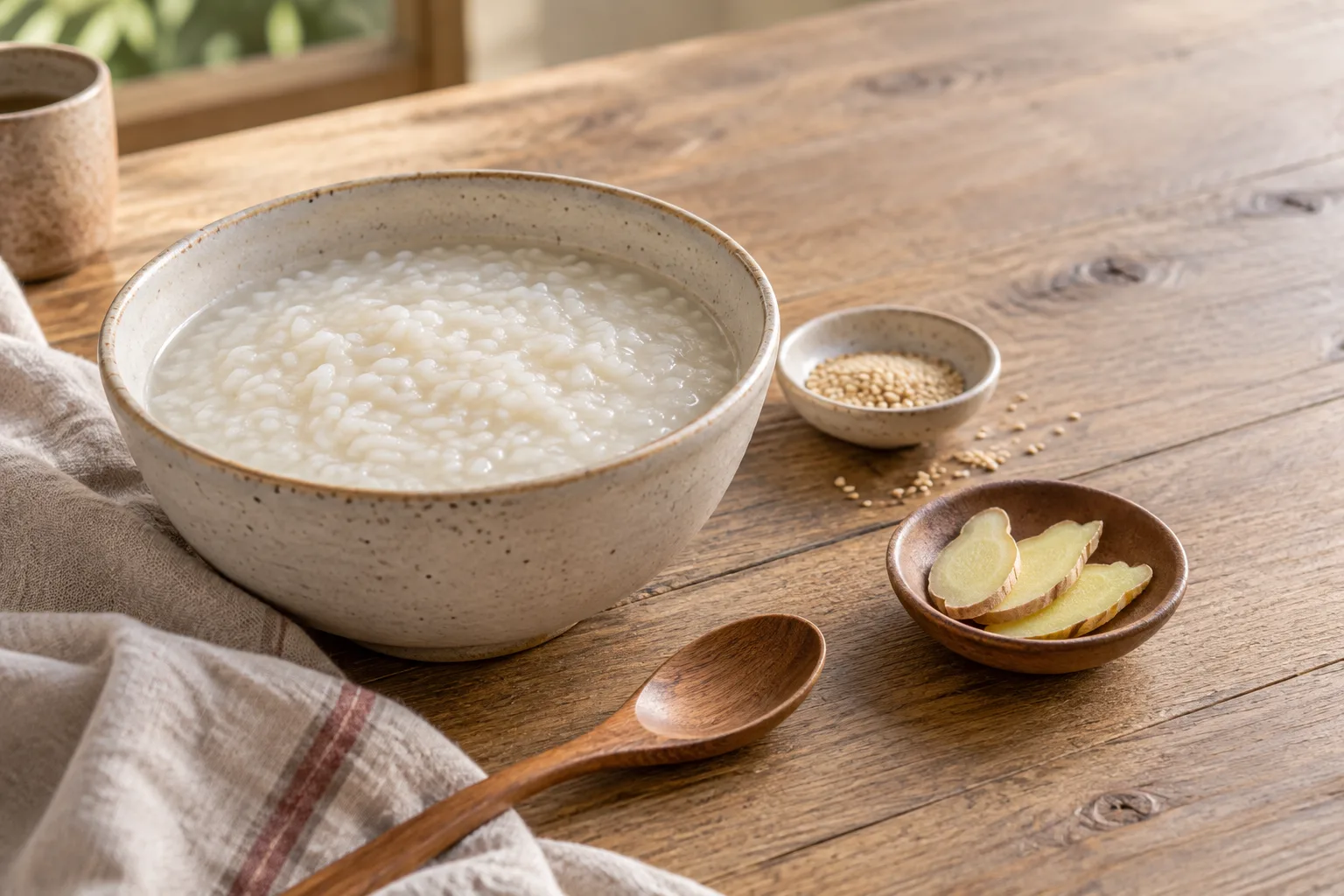
The five categories below answer to the four patterns above. Start with the one or two easiest to keep up; there’s no need to do everything at once.
Acupressure Points
Once a day, press with the pad of a finger, firm enough for a mild, bearable ache, 60 seconds per point.
Zusanli (ST36) Location: about four finger-widths below the outer hollow under the kneecap, one finger-width to the outside of the shinbone. Traditional use: the most-used point for supporting digestion and building qi. Suits the running-on-empty and after-meals heavy types. 60 seconds per side.
Qihai (CV6) Location: about two finger-widths directly below the navel. Traditional use: the name means “sea of qi”; traditionally used for deep depletion and listlessness. Lie on your back and press for 1–2 minutes. Don’t press within half an hour after a meal.
Guanyuan (CV4) Location: about four finger-widths directly below the navel. Traditional use: traditionally used to warm and nourish yang, suiting the cold type. Lie down before bed and rub gently for 1–2 minutes. Do not press abdominal points during pregnancy.
Sanyinjiao (SP6) Location: four finger-widths above the tip of the inner ankle bone, just behind the inner edge of the shinbone. Traditional use: traditionally linked to three channels at once (Liver, Spleen, Kidney), and used when tiredness comes with poor sleep. Do not use during pregnancy.
This set of points mainly supports the Spleen and builds qi, so it suits the qi-deficiency and dampness directions best. Pause during a cold, fever, or an active flare of “heat” symptoms, and press more lightly if you’re markedly frail.
Food Therapy
Chinese home-style track:
- Chinese yam and millet congee: 100 g fresh Chinese yam (also sold as shan yao or nagaimo, a pale, mildly sweet root, found fresh or vacuum-packed at Asian supermarkets) peeled and cubed, simmered with 50 g millet into a porridge for breakfast. Traditionally the yam supports the Spleen and millet settles the stomach. Suits both the running-on-empty and after-meals heavy directions.
- Red date and ginger drink: simmer 2–3 culinary red dates, split open, with 1–2 slices of ginger in 300 ml water for 10 minutes. This is an optional drink, not a fatigue treatment; omit ginger if it causes reflux.
- Rose bud tea: a few dried rosebuds (sold loose at Asian grocers or online) steeped in hot water. Traditionally it eases constrained qi and suits the pent-up type. Method and details are on the rose flower tea page.
- Cut back on cold, raw, sweet, and greasy food: iced drinks, sweets, and fried food all feed the heavy, damp direction. If you’re the after-meals heavy type, run this change for a week first and watch what shifts.
Western everyday track:
Same thinking, built from ingredients any American or British supermarket stocks:
- Oatmeal and eggs breakfast: 50 g rolled oats simmered 5 minutes in water or milk, with 1–2 boiled eggs on the side. Oats digest slowly and raise blood sugar evenly, the “steady the energy supply” direction. Suits the running-on-empty and after-meals heavy types, as breakfast.
- Sweet potato, squash, and red lentil soup: 200 g sweet potato and 200 g pumpkin or butternut squash, peeled and cubed, plus 100 g rinsed red lentils, simmered in about 1 liter of water for 25 minutes until soft, with a little salt. Warm, soft, and easy to digest, it lowers the load on the production line the same way the yam congee does. Suits the after-meals heavy type, as lunch.
- Ginger, date, and cinnamon tea: 3 slices of fresh ginger, 2 Medjool dates split open, and 1 small cinnamon stick, simmered in water for 10 minutes, with a little honey stirred in once it cools to warm. Warm and gently sweet, it answers the cold direction. Drink it in the morning, not at night; it suits the cold type.
- Chicken soup over rice: 1 chicken leg simmered 40 minutes in water with 2 slices of ginger and 1 chopped carrot, fat skimmed, then ladled over a bowl of soft rice. Warm, nourishing, and easy to digest; in the traditional frame it answers the depleted, early-recovery kind of tired. Serve as dinner.
Both tracks mainly support the Spleen and build qi, suiting the qi-deficiency and dampness directions. If you run clearly cold, lead with the ginger-date-cinnamon tea; if your tiredness ties to mood, lead with the rose tea. Everything here is a food-therapy use of culinary-grade ingredients; if you intend to use any of them as medicinal herbs, consult a licensed TCM practitioner first.
Emotional Care
“Overthinking knots qi”: rumination manufactures fatigue in its own right.
- Give emotion a daytime outlet: a walk, a conversation, writing it down, anything that moves it out. People who sigh a lot need this most; sighing is the body trying to unjam itself.
- Give your worries a parking spot: before bed, write each nagging item on paper with a time tomorrow when you’ll deal with it, then leave it on the page instead of taking it to bed.
- When you’re too tired to socialize, make the cheapest connection possible: one message, one meal eaten with another person. The pent-up kind of tired deepens in solitary rumination.
This section maps most directly to the pent-up pattern, but anyone in an overthinking stretch can use it.
Movement and Exercise
If ordinary activity causes delayed worsening lasting days, stop increasing exercise and seek assessment. Persistent unexplained fatigue or fatigue affecting daily life warrants an appointment now; a self-care trial is not a prerequisite. See the fatigue topic’s care guidance.
- Baduanjin (Eight Pieces of Brocade, a slow, standing sequence of eight gentle exercises) is a good starting point when your energy is low. For the after-meals heavy type, spend extra time on the single-arm raising move that traditionally regulates the digestive system; for the cold type, on the two-handed upward stretch.
- Keep the intensity at “light sweat, no panting, not tired afterward.” Hard training while fatigued is the big mistake here: “overwork drains qi,” and exercise overshoot costs energy too. Start at 10–15 minutes a day and adjust only if both immediate and delayed symptoms stay stable.
Gentle movement suits the qi-deficiency, dampness, and cold directions. For the pent-up type, outdoor brisk walking works better: the body moves and the mood gets an exit.
Sleep and Daily Rhythm
- In bed by 11 p.m. where possible, with a fixed wake time (this is the same rhythm adjustment as the modern section above).
- Nap 20–30 minutes, finished before 3 p.m. For the after-meals heavy type the nap lands right on the post-lunch slump, but past half an hour you wake up groggier.
- Cold type: start the day with a glass of warm water and 10 minutes of sunlight; in the evening, soak your feet in warm water for 15 minutes, water above the ankles.
The early bedtime and the nap cap apply regardless of tendency. For the cold direction especially, the 11 p.m. bedtime and the morning sunlight are the two to hold onto.
Different tendencies call for different emphasis, and that’s by design: running on empty means meals and sleep first, damp heaviness means diet first, pent-up means emotional outlets first. If you’d like to know which way you lean, the free constitution test at the end of this page is a self-observation tool (not a diagnosis): it shows your tendencies across the nine types and helps you decide what to do first.
A One-Week Fatigue Log
Seven days of notes will tell you more about your tiredness than any general advice. Two minutes before bed each night, record:
| What to record | How to record it | Example |
|---|---|---|
| Sleep | Bedtime and wake time, how many times you woke, refreshed or not | 11:40 p.m.–6:50 a.m., woke once, not refreshed |
| After-meal state | Sleepiness 1 hour after each meal (0–10) | 8 out of 10 after lunch |
| Daily energy curve | One score each for morning, afternoon, evening (0–10) | Morning 4 / afternoon 2 / evening 6 |
| Caffeine and alcohol | Time and amount | One coffee at 2 p.m.; 2 drinks |
| Exercise | Type and duration | 20-minute brisk walk |
| Stress and mood | Any clear stress event or emotional low that day | Criticized in the afternoon, flat ever since |
| Body signals | Feeling cold, racing heart, thirst and urination, snoring, etc. | Hands and feet cold |
Use the log to describe when fatigue occurs and how sleep, meals and activities relate to it. These associations do not diagnose glucose problems or a TCM pattern. Bring the notes to your appointment; do not delay care to finish a recording period.
How Long Until You See Improvement
Use the dates in your plan as review points, not promises of recovery. Responses to sleep, food and activity changes depend on the cause of fatigue and your circumstances. There is no established recovery timetable for the acupressure or food-therapy suggestions here.
- Review your notes weekly: compare sleep, daytime energy and the effects of activity. One better day does not identify a cause.
- Watch for delayed worsening: if ordinary activity brings a marked decline hours to a day or two later that lasts for days, reduce the load, stop increasing activity and seek assessment. Do not push through a fixed exercise plan.
- Arrange care when needed: unexplained fatigue lasting weeks or affecting daily life warrants a medical appointment. Do not wait to complete a diary or self-care trial; worsening symptoms or the warning signs below need earlier attention.
See NHS advice on fatigue and CDC guidance on post-exertional malaise.
When to See a Doctor
Self-care suits mild-to-moderate fatigue with a lifestyle-heavy profile. Get medical care first if any of the following apply:
- Unexplained weight loss, persistent fever, or night sweats heavy enough to soak clothing and bedding;
- Chest pain, shortness of breath, or marked palpitations, or paleness that keeps getting worse;
- Loud snoring with witnessed pauses in breathing during sleep, plus uncontrollable daytime sleepiness (sleep apnea needs ruling out);
- Abnormal thirst, frequent urination, and weight loss (blood sugar needs checking);
- Low mood and loss of interest lasting more than two weeks, or any thoughts of harming yourself (seek professional help promptly);
- Fatigue that starts suddenly and worsens fast, or arrives with new symptoms like numbness in hands and feet or swelling in the neck.
No red flags but 2–4 weeks of self-adjustment with no improvement: book an appointment with your primary care or family doctor, bring your fatigue log, and describe how long it’s lasted and what you’ve already changed. The usual first-round tests are a complete blood count, thyroid function, blood glucose, and ferritin, which happen to cover the most common checkable causes listed in this article.
This article is general health education and can’t replace a doctor’s diagnosis or individualized advice. If you take any prescription medication, especially antidepressants or blood pressure drugs, talk to your doctor before changing any dose, and never stop on your own. With beta blockers, for example, stopping abruptly can itself trigger serious heart problems.
Constant tiredness is usually a sum of factors, and taken apart, each one has a counter. For the fuller picture of fatigue care, start at the fatigue hub; if you’re exhausted but can’t sleep, read why you’re tired but can’t fall asleep; and to work out your constitution tendency, read the nine TCM constitution types.
Same tiredness, different starting points: which way does your body lean?
Tiredness from running on empty and tiredness from feeling weighed down call for different first changes. The free constitution test shows your tendencies across nine traditional body types and helps you decide where to begin. It's a self-observation tool, not a medical diagnosis.
References15 sources
- 01
UK National Health Service (NHS)
- 02
U.S. National Institutes of Health, MedlinePlus
- 03
U.S. National Heart, Lung, and Blood Institute (NHLBI / NIH)
- 04
U.S. National Institute of Diabetes and Digestive and Kidney Diseases (NIDDK / NIH)
- 05
U.S. National Institute of Diabetes and Digestive and Kidney Diseases (NIDDK / NIH)
- 06
U.S. Centers for Disease Control and Prevention (CDC)
- 07
NIH Office of Dietary Supplements (ODS)
- 08
NIH Office of Dietary Supplements (ODS)
- 09
NIH Office of Dietary Supplements (ODS)
- 10
U.S. National Institute of Mental Health (NIMH / NIH)
- 11
U.S. National Institutes of Health, MedlinePlus
- 12
U.S. Food and Drug Administration (FDA)
- 13
U.S. National Institutes of Health, MedlinePlus
- 14
U.S. National Center for Complementary and Integrative Health (NCCIH / NIH)
- 15Huangdi Neijing: Suwen (The Yellow Emperor's Inner Classic: Basic Questions)
Classic of Chinese medicine, ~2nd century BCE
Personalized guidance
Use the app for constitution-friendly ideas and structured plans when available.
Download the App
Get personalized TCM health recommendations