Why Am I Always Tired and Cold? What to Check First, and How to Warm Back Up
Feeling tired and cold at the same time is a clue with a direction: your thyroid and iron stores are worth checking first. The modern mechanisms behind being tired and cold all the time, the TCM patterns, a one-week self-observation log, and when to see a doctor.
By WellTao · Published: · Last updated: · Editorial Policy
More articles in this topicTable of contents
The Short Version
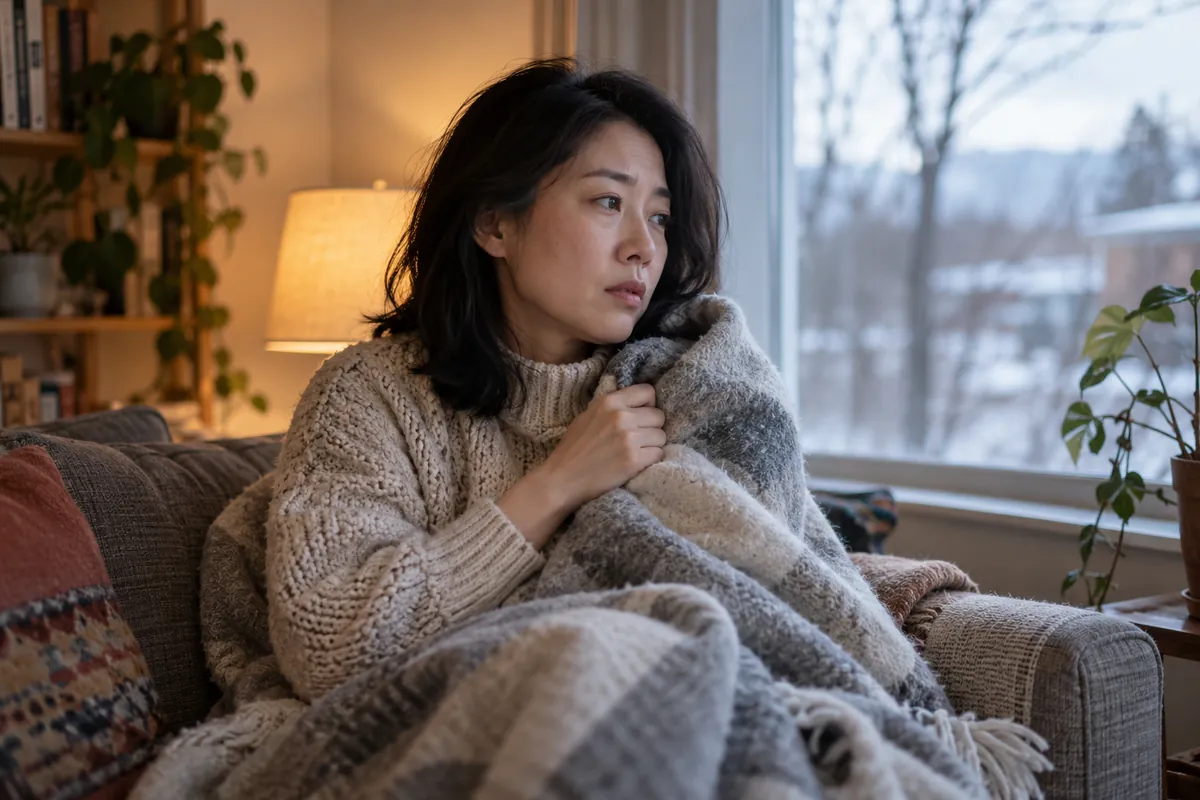
Being tired and cold at the same time isn’t something to file under “just my constitution” and forget. The pairing narrows the search to a few specific problems. Two deserve first place: an underactive thyroid (the body’s thermostat turned down) and low iron or anemia (less oxygen delivered, so both energy and heat production fall short). Being underweight, chronically undereating, certain medications such as beta-blockers, and circulation problems can produce the same combination.
The next move isn’t blind supplementation or toughing it out. It’s three things: work out which kind of cold yours is using the patterns below, watch it with a simple log for a week or two, and if it persists, get three blood tests: TSH (thyroid-stimulating hormone), a complete blood count, and ferritin. Those three happen to cover the most common, and most often missed, causes behind “why am I always tired and cold.”
Which Kind of Cold Are You
Cold hands and feet in winter that warm up again soon after you come indoors are normal for a lot of people, and women’s hands and feet do tend to run a bit colder. If you’re always feeling cold and tired, the patterns below are the ones worth noticing, because they point in different directions:
- Cold all over: cold from the inside out, no amount of layering gets you properly warm, and you’re the first to suffer in air conditioning. If it comes with creeping weight gain, constipation, dry skin and hair, slowed thinking, and worse memory, the combination points toward the thyroid.
- Cold at the extremes: hands and feet cold year-round while your trunk isn’t especially cold. Add a pale or sallow face, easy dizziness or a racing heart, brittle nails, and breathlessness on light exertion, and for women often heavy periods: this points toward low iron and anemia.
- Color-changing fingers: fingers or toes that turn white in the cold, then blue-purple, then red as they rewarm, with numbness or tingling. This is beyond ordinary “feeling cold.” It may be Raynaud’s phenomenon and needs a doctor’s evaluation; see When to See a Doctor.
- Thin and undereating: low body weight, chronically small meals, or active dieting, with cold and low energy everywhere. The body is short on both fuel and insulation.
- Medication-related: the cold hands, cool fingers, and fatigue started after you began a blood-pressure or heart medication, especially a beta-blocker such as propranolol.
Your pattern can be a mix of these and can shift with your state. Note the closest match now; the checking and the daily care both start from it.
What Modern Medicine Says
The thyroid: a thermostat turned down
One sentence on thyroid hormones: they set how fast every cell in your body burns fuel. The U.S. National Institute of Diabetes and Digestive and Kidney Diseases (NIDDK) puts it this way: thyroid hormones control how the body uses energy and affect nearly every organ. When hormone runs low, every cell’s metabolism gets turned down. Heat output drops and you feel cold, while heart rate, gut motility, and brain speed slow along with it, so cold and tired arrive together, usually with constipation, dry skin, and weight gain. On the NHS list of common hypothyroidism symptoms, “unusual tiredness” and “feeling cold more than usual” sit at the top.
The most common cause is Hashimoto’s thyroiditis, an autoimmune condition, and it affects women far more than men. It develops slowly, and symptoms can drag on for months or even years before anyone notices. The good news is that it’s easy to rule in or out: a blood test for TSH and T4 gives a first answer.
Iron and anemia: not enough trucks to carry oxygen
Iron is the raw material for hemoglobin, the protein that ferries oxygen around in the blood. Cells need oxygen to make energy and heat efficiently, so when the trucks run short, the whole body operates on low oxygen and energy and heat both come up short. MedlinePlus summarizes anemia symptoms in nearly those words: feeling tired, cold, dizzy, and irritable. The U.S. Office on Women’s Health lists fatigue, weakness, and low body temperature among iron-deficiency symptoms too.
Women run a clearly higher risk because of menstrual blood loss, and anyone with heavy periods is especially worth testing. The tests are simple: a complete blood count (CBC) shows whether anemia is present, and ferritin shows iron stores. At the stage where ferritin is low but anemia hasn’t developed yet, you can already be tired and cold.
Other things that put tired and cold together
- Eating too little, weighing too little: food is fuel. On chronically low calories the body turns down heat production and narrows the blood vessels to the limbs to protect core temperature, and a thin fat layer insulates poorly. “Cold, tired, and no energy” in dieters is often exactly this.
- Circulation and Raynaud’s: how warm your hands and feet feel depends on blood supply. In Raynaud’s, the small vessels of the fingers and toes clamp down too hard in response to cold or stress, blood flow briefly stops, and the skin turns white, then blue-purple, then red. The NHS notes it’s usually not serious, but it sometimes signals another condition, so a doctor should make the call.
- Blood sugar: a low-blood-sugar episode brings sweating, shaking, a racing heart, and weakness (the NHS hypoglycemia list). Repeated lows in someone with diabetes mean the treatment plan needs adjusting with a doctor.
- Sleep loss: chronic short sleep amplifies fatigue on its own and disrupts the normal daily rhythm of body temperature, so cold, tired, and sleepy get amplified together. If you notice you’re coldest when you’re most tired, look at your sleep first.
- Medication: cold fingers and toes plus fatigue is a known side effect of beta-blockers such as propranolol. If you’re on one, tell your doctor about it, and don’t stop the medication on your own.
This is where the pair earns its keep as a clue. Either symptom alone has a broad list of causes, but together they push thyroid and anemia well up the list, because those two hit heat production and energy supply at the same time.
How Chinese Medicine Reads Feeling Cold
What follows is the traditional framework, offered for self-observation. It’s an empirical model built over millennia, not a diagnosis in the modern medical sense. For a neutral overview of the framework from a modern research institution, the U.S. National Center for Complementary and Integrative Health (NCCIH) keeps a plain-language introduction to traditional Chinese medicine.
Chinese medicine assigns the body’s heat production to “yang qi.” Two thousand years ago the Suwen (Basic Questions), part of the Yellow Emperor’s Inner Classic, made the famous comparison: “Yang qi is to the body what the sun is to the sky.” In plain terms, yang qi is the furnace inside the house. A strong furnace keeps the rooms warm; a weak one leaves you cold from the inside out and low in spirit, which is exactly the whole-body picture of tired and cold together.
A strong furnace alone isn’t enough, because the heat still has to reach the far ends. That job belongs to “qi” and “blood”: qi is the driving force that moves things, blood is the medium that carries warmth and nourishment. When qi and blood run short, the hands and feet, farthest from the furnace, cool first. About 1,800 years ago Zhang Zhongjing wrote in the Shanghan Lun (Treatise on Cold Damage): “Whenever there is jue, the yin and yang qi have failed to meet and continue; jue means the hands and feet running cold.” Traditional medicine noticed long ago that cold hands and feet signal energy failing to reach the ends of the body, not just too few layers.
One level deeper is the division of labor between “Spleen” and “Kidney” (capitalized because these are functional systems on the traditional map, not the anatomical organs). The Spleen is the kitchen: it converts what you eat into usable energy. The Kidney is the pilot light, the base-level fire underneath everything. Long stretches of irregular meals and too much cold, raw food wear on Spleen yang; long overwork, late nights, and age drain Kidney yang. So people who feel cold tend toward two base patterns: cold food sits badly and stools run loose on the Spleen side; a cold lower back and belly with weak, aching lower back and knees on the Kidney side, and often some of both.
On observable patterns, the map reads like this:
- Cold all over + low spirits + loose stools and clear, copious urine: traditionally read as “yang qi insufficiency.” People with a yang-deficiency constitution tendency are more prone to this pattern.
- Cold hands and feet + a poor complexion + racing heart and heavy periods: read as “qi and blood insufficiency,” which overlaps considerably with a qi-deficiency constitution tendency.
- Cold lower back and belly + morning diarrhea + weak, aching lower back and knees: read as “Spleen-Kidney yang deficiency.”
Note the direction of the arrow: a constitution tendency makes a pattern more likely, and one set of symptoms doesn’t earn you a constitution label. Patterns mix, and they change with your state; formal differentiation takes an in-person TCM practitioner. One more distinction matters: yang deficiency is not hypothyroidism. They belong to different systems of thought, but the order “check thyroid and iron first, then talk about daily care” applies to everyone. For the framework itself, see the nine TCM constitution types, and compare the typical presentations of the yang-deficiency and qi-deficiency constitutions.
Everyday Adjustments
Dress in layers, not just thicker
Three layers beat one heavy coat: a base layer that moves sweat away (cotton or a wicking fabric, changed the moment it’s damp), a middle layer that holds heat (wool or fleece), and an outer layer that blocks wind. Hands and feet lose heat fastest, so mittens beat gloves, and wet socks get changed right away. Avoid sharp temperature jumps where you can, like walking straight from a heated room into cold wind. The NHS advice for people with Raynaud’s suits anyone who runs cold: keep your home warm, protect your hands and feet in cold weather, and exercise regularly to improve circulation.
Eat enough fuel, and put iron first
If you’ve been dieting a long time, bring calories back to a normal level first; a body won’t heat a house it refuses to add wood to. For iron, the efficiency ranking is clear: iron from animal foods (red meat, liver) absorbs two to three times better than plant iron. Plant sources (spinach, beans, tofu) still count, especially eaten with vitamin C in the same meal (an orange, tomatoes, broccoli). Tea and coffee do the opposite and block iron absorption, so keep them at least an hour away from meals. If your periods are heavy, diet alone often can’t keep up, and a ferritin test is worth asking for directly.
Movement is the most active way to make heat
If ordinary activity causes delayed worsening lasting days, stop increasing exercise and seek assessment. Persistent unexplained fatigue or fatigue affecting daily life warrants an appointment now; a self-care trial is not a prerequisite. See the fatigue topic’s care guidance.
Contracting muscle is one of the body’s biggest heat sources, and regular exercise improves circulation to the extremities. Thirty minutes a day of brisk walking, jogging, or cycling, enough to feel slightly warm and lightly sweaty. Desk workers: two or three minutes up and moving every hour protects hand and foot temperature better than one hard workout after work.
A warm foot soak before bed
An hour before bed, soak for 15–20 minutes in water around 40°C (about 104°F, warm but never hot), with the water above your ankles, until your body feels slightly warm. No need to chase sweat. It directly improves blood flow in the lower legs and doubles as a wind-down signal for sleep. One caution: people with diabetes or reduced sensation in the legs can’t judge water temperature reliably. Test it with your hand or a thermometer first to avoid burns.
TCM Methods
The five categories below stack. Start with the one or two you can actually keep up; there’s no need to do everything at once.
Acupressure
Press each evening with the pad of a finger, firm enough to feel a mild, bearable soreness.
Guanyuan (CV4) Location: about four finger-widths straight below the navel. How: rub gently with the heel of the palm or a fingertip for 3–5 minutes, until the spot feels slightly warm. Traditionally a key point for warming and supporting yang qi, suited to people who are cold all over with low spirits. Avoid pressing this point during pregnancy.
Zusanli (ST36) Location: about four finger-widths below the outer dip under the kneecap, one finger-width to the outside of the shinbone. How: press 1–2 minutes per side. Traditionally used to strengthen the Spleen and stomach and build qi and blood, a good regular point for people whose “fuel conversion” runs poor.
Sanyinjiao (SP6) Location: about four finger-widths above the tip of the inner ankle bone, just behind the inner edge of the shinbone. How: press 1–2 minutes per side, suited to cold hands and feet in the qi-and-blood-insufficiency direction. Do not use during pregnancy.
This point set leans warming and tonifying overall, so it fits yang-deficiency and qi-deficiency tendencies best. Pause it during spells of heat signs (a sore throat, a flushed and overheated feeling), and keep the pressure at mild soreness, never pain.
Food Therapy
Chinese home-style track:
-
Ginger and red date tea: 3–5 slices of fresh ginger and 3 dried red dates (jujubes, also labeled Chinese dates, sold dried at Asian supermarkets and online), dates split open, simmered in about 500 ml (2 cups) of water for 10 minutes, drunk warm in the morning or afternoon. It’s the most common home remedy for people who run cold, warming and dispersing chill (a food-therapy use; consult a licensed TCM practitioner before using these as medicinal herbs). Pause it during heat signs, a sore throat, or if your constitution runs hot.
-
Eat enough, with regular meals: choose foods you tolerate and enjoy. Warm dishes may feel comforting when you are cold, but cold food is not an established cause of fatigue and does not need to be excluded unless it causes symptoms.
-
Lamb stew with daikon: lamb stewed with ginger and daikon (the long white radish, sold at Asian groceries) is a classic warming winter home dish. Once or twice a week is enough; it isn’t an everyday food.
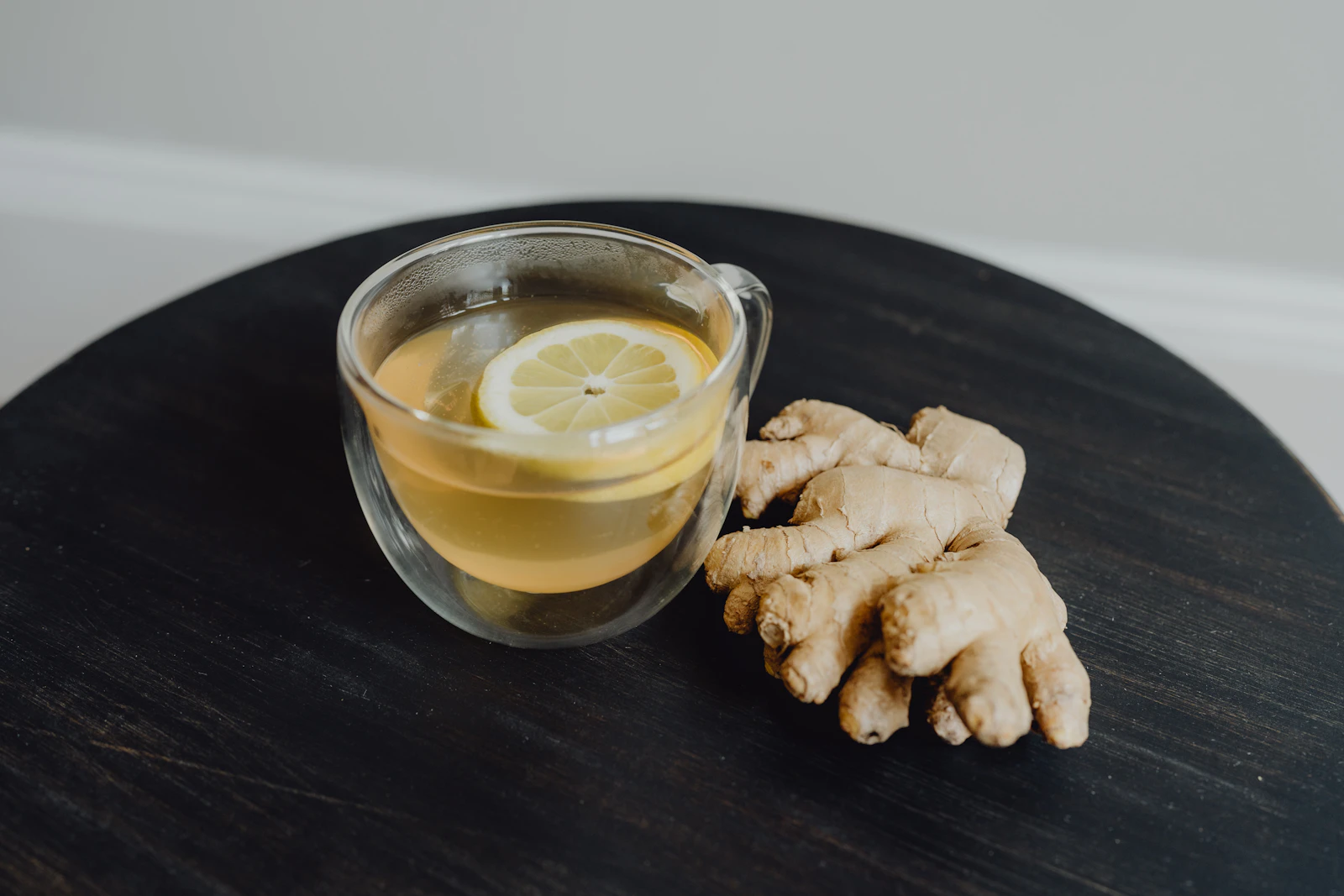
Photo: Kelly Sikkema · Unsplash
Western everyday track:
The idea is identical: a hot breakfast, warm drinks, and a warm stew at main meals, built from ordinary supermarket ingredients.
- Cinnamon-date oatmeal: half a cup of rolled oats (about 40 g) simmered in 250 ml (1 cup) of milk or water for 5 minutes; add 1–2 chopped dates, a small pinch of cinnamon, and 2 slices of fresh ginger, cook 2 more minutes, and eat warm. For someone who runs cold, a hot bowl of porridge beats coffee with cold cereal by a wide margin.
- Ginger chicken soup: 2 chicken legs (or a chicken carcass) with 4–5 slices of fresh ginger, 1 onion, and 1 carrot, covered with water and simmered gently for an hour, salted to taste. Warm, energy-dense, and easy to digest. Make a pot on the weekend and drink it over two or three days.
- Baked sweet potato with cinnamon: 1 sweet potato (about 250 g) washed and baked at 200°C (400°F) for 45–60 minutes until soft, split open and dusted with a little cinnamon. A warm, easy-to-digest staple that suits a weak Spleen-yang direction, as a snack or alongside a meal.
- Pumpkin and red lentil stew: 1 cup of red lentils (about 200 g) with pumpkin chunks, 3 slices of fresh ginger, and half an onion, simmered in water for 25 minutes until soft and salted to taste. When you’re cold and have no appetite, let it stand in for salads and cold sandwiches.
Both tracks lean warming overall, so they fit yang-deficiency and qi-deficiency tendencies. During heat-prone spells, scale the ginger, lamb, and cinnamon back or pause them. Everything here uses culinary-grade ingredients as food therapy; if you intend to use any of them as medicinal herbs, consult a licensed TCM practitioner first.
Emotional Care
Tradition holds that long-suppressed emotion keeps yang qi from spreading, so the fire gets smothered. Everyday observation backs the pattern: during low-mood, high-pressure stretches, people often feel colder. A little sunlight every day and a daytime outlet for emotion (a walk, a conversation, writing it down) help the cold as much as a cup of ginger tea does. This one isn’t constitution-dependent, and during long stretches of pressure or low mood it’s the place to start.
Movement and Breathing Exercise
Baduanjin (Eight Pieces of Brocade, a slow traditional routine of stretches coordinated with breathing) suits people who run cold, practiced in the morning or mid-morning for 15–20 minutes. Two of its eight moves, “holding up the sky with both hands” and “bending to hold the feet to strengthen the Kidney and lower back,” are worth a few extra repetitions. Tradition says stop at a light sweat: heavy sweating is held to scatter yang qi, and the modern view lands in the same place, since evaporating sweat carries heat away and leaves you colder. Baduanjin is gentle enough for both yang-deficiency and qi-deficiency tendencies. If you’re clearly frail, start at 10 minutes and stop at slightly warm.
Sleep and Daily Rhythm
- In bed by 11 p.m. where possible. Tradition holds that late nights drain yang qi hardest. The Suwen’s chapter on seasonal living advises winter as “early to bed, late to rise, and wait for the daylight”: in the cold season, sleep a little more and move with the sun. That advice is written straight into the classic.
- A foot soak an hour before bed, as a fixed shutdown ritual (method above).
- Don’t throw the covers off the moment you wake. Move your hands and feet under the blanket and take a few stretches first, giving your body a warm-up before you get up.
Early nights, the foot soak, and the slow morning warm-up suit yang-deficiency tendencies especially well, but any constitution can use them.
A One-Week Tired-and-Cold Log
Log for one to two weeks and you’ll have your own map of cold and tired. Bring it to appointments; it beats describing symptoms from memory. One minute a day, six items:
| What to record | What to write |
|---|---|
| Where and when the cold hits | Hands and feet / lower back and belly / whole body; morning / afternoon / night; in air conditioning or outdoors |
| Clothing and environment at the time | Everyone else in short sleeves while you’re in long sleeves? What’s the room temperature? |
| What comes with it | Racing heart, dizziness, shortness of breath, constipation, dry skin, poor focus |
| The day’s food | Did you eat enough? Any red meat, liver, dark leafy greens? |
| Period status (women) | Which day of the cycle, and heavier or lighter than usual |
| Sleep and medication | Hours slept; what you’re taking |
After a week, look for the main thread. Cold concentrated in hands and feet plus heavy periods: check ferritin first. Whole-body cold with weight gain and constipation: check TSH first. Fingers that change color: book a doctor’s visit to evaluate Raynaud’s. The thin, undereating pattern: eat enough first and watch what changes.
How Long Until You See Improvement
Use the dates in your plan as review points, not promises of recovery. Responses to sleep, food and activity changes depend on the cause of fatigue and your circumstances. There is no established recovery timetable for the acupressure or food-therapy suggestions here.
- Review your notes weekly: compare sleep, daytime energy and the effects of activity. One better day does not identify a cause.
- Watch for delayed worsening: if ordinary activity brings a marked decline hours to a day or two later that lasts for days, reduce the load, stop increasing activity and seek assessment. Do not push through a fixed exercise plan.
- Arrange care when needed: unexplained fatigue lasting weeks or affecting daily life warrants a medical appointment. Do not wait to complete a diary or self-care trial; worsening symptoms or the warning signs below need earlier attention.
See NHS advice on fatigue and CDC guidance on post-exertional malaise.
When to See a Doctor
Self-care suits mild-to-moderate coldness that’s mostly about lifestyle. Get a professional evaluation first if any of these apply:
- Fingers or toes turn white, then blue-purple, then red in the cold, with numbness or tingling: possible Raynaud’s, and a doctor should evaluate it. Especially when it first appears after age 30, happens on only one side of the body, or comes with joint pain, rash, or muscle weakness (the NHS lists these as reasons to be seen).
- The cold suddenly worsens or keeps getting more obvious, or comes with clear weight gain or loss.
- Tired that rest doesn’t fix, lasting more than two weeks, or with a pale face, racing heart, and shortness of breath.
- Periods clearly heavier or longer than before: heavy bleeding is both a common source of iron loss and worth checking in itself.
- Marked cold and cool hands while taking blood-pressure or heart medication: talk to your doctor about adjusting it, and don’t stop the medication on your own.
At the appointment you can ask directly about TSH, a CBC, and ferritin, and bring your log. It helps the doctor find the direction fastest.
This article is general health education and can’t replace a doctor’s diagnosis or individualized advice.
For the fuller picture of the “tired” side, read why you’re always tired with no energy and the fatigue hub. For the constitution framework behind feeling cold, see the nine TCM constitution types and the yang-deficiency constitution.
Feeling cold runs in different constitutional directions. Which way do you lean?
The free constitution test shows your tendencies across nine traditional body types. The same cold hands can come from a yang-deficiency direction or a qi-and-blood-insufficiency direction, and the daily care that fits each one is different. Results are for self-observation, not medical diagnosis.
References10 sources
- 01
UK National Health Service (NHS)
- 02
U.S. National Institute of Diabetes and Digestive and Kidney Diseases (NIDDK / NIH)
- 03
U.S. National Institutes of Health MedlinePlus
- 04
U.S. Office on Women's Health, Department of Health and Human Services
- 05
UK National Health Service (NHS)
- 06
UK National Health Service (NHS)
- 07
UK National Health Service (NHS)
- 08
U.S. National Center for Complementary and Integrative Health (NCCIH / NIH)
- 09Huangdi Neijing: Suwen (The Yellow Emperor's Inner Classic: Basic Questions)
Classic of Chinese medicine, ~2nd century BCE
- 10Shanghan Lun (Treatise on Cold Damage)
Classic of Chinese medicine, Zhang Zhongjing, ~3rd century CE
Personalized guidance
Use the app for constitution-friendly ideas and structured plans when available.
Download the App
Get personalized TCM health recommendations