Why Do I Feel Weak and Tired All the Time? Weakness Isn't the Same as Sleepiness
Feeling weak and feeling sleepy are two different problems with different fixes. From muscle loss, protein, and iron to thyroid and blood sugar, plus the Chinese medicine view of why limbs feel powerless: the common causes, a one-week self-check, and what to do first.
By WellTao · Published: · Last updated: · Editorial Policy
More articles in this topicTable of contents

The Short Version
Feeling weak (no strength in your limbs) and feeling sleepy (wanting to sleep) are two different problems, with different causes and different fixes. If you’ve been wondering why you feel weak and tired all the time, the most common answers are not alarming: muscle quietly lost to years of sitting, not enough protein on the plate, and chronically short sleep. All three are yours to change. But weakness plus fatigue that drags on for weeks without lifting can also be a signal of iron-deficiency anemia, an underactive thyroid, blood sugar trouble, or depression, and telling those apart takes a blood draw.
One red line comes first: if the weakness arrived suddenly, sits on one side of the body, or comes with slurred speech or a drooping face, don’t self-check and don’t wait. Call emergency services now. That is the classic stroke picture, and treatment is counted in minutes. This article covers the other situation: weakness that is constant, symmetrical on both sides, and slow to change.
Which Kind of Tired Are You
English lumps three different things into “no energy.” Separate them first:
| What you feel | Closer to | Typical signs |
|---|---|---|
| You want to move but can’t find the strength | Weakness (loss of muscle strength and endurance) | Groceries feel heavier, legs go soft on stairs, you can’t wring out a towel |
| You can move fine but keep craving sleep | Sleepiness (too much sleep pressure) | Heavy eyelids, nodding off in meetings, a non-negotiable nap by mid-afternoon |
| You’re empty and want nothing | Fatigue (feeling drained of energy) | Rest doesn’t restore you, interest in everything drops |
The three can coexist, but the main line differs. This article focuses on the first, the physical sensation of weakness. The bigger question of feeling drained and tired all the time is covered in why am I always tired and have no energy, so it isn’t repeated here.
What counts as a normal fluctuation: soft legs for a day or two after hard exercise, a shaky feeling after an all-nighter, low stamina for a few weeks while recovering from an illness. Rest and food bring those back on their own. The signals worth taking seriously: weakness lasting more than two weeks without easing, weakness that now interferes with groceries and stairs, or weakness that is clearly worse week over week.
What Modern Medicine Says
Weakness means your muscles are not getting enough energy or clear instructions. Follow that line and the common causes sort into a handful of groups.
The muscle itself has shrunk. Muscle is use-it-or-lose-it tissue: sit for years and never work against resistance, and muscle mass and strength quietly drain away, so the same bag of rice that used to be fine now feels heavy. The WHO estimates that about 31% of adults worldwide don’t get enough physical activity, and inactivity is itself a risk factor for chronic disease and early death. The good news is that this is the easiest cause on the list to reverse.
Not enough raw material to build muscle. Protein is what muscle repairs and rebuilds itself from. Chronic dieting, a monotonous diet, or an appetite that shrinks with age can all leave you short, and the body covers the gap by breaking muscle down. By MedlinePlus’s math, one egg or 30 g of meat, fish, or poultry holds about 7 g of protein; many people don’t reach five of those portions across an entire day.
Oxygen isn’t reaching the muscle. Iron builds hemoglobin, which carries oxygen from the lungs to the rest of the body, and it also goes into myoglobin, which supplies oxygen inside muscle itself. When iron deficiency progresses to anemia, the blood carries less oxygen and the muscles work half-suffocated: weakness, tiredness, a racing heart, shortness of breath, pale skin. Women with heavy periods, pregnant women, and people who don’t eat meat are the high-risk groups. The NIH Office of Dietary Supplements sets the daily target at 18 mg of iron for adult women and 8 mg for adult men, and most of the gap comes from menstrual blood loss.
The body’s throttle has been turned down. Thyroid hormone works like a gas pedal for every cell. In hypothyroidism the pedal comes up and everything slows: feeling cold, weight gain, constipation, sleepiness, weak and aching muscles. You cannot diagnose it by feel; a blood test is the only way to confirm it (American Thyroid Association).
Energy stuck in the blood, unable to enter the cells. Insulin’s job is moving blood sugar into cells as fuel. With diabetes or marked insulin resistance, blood sugar runs high while the cells starve, and you feel weak and exhausted at the same time. When weakness comes with intense thirst, frequent urination, and weight loss, a blood sugar check is worth doing (NIDDK).
Chronic short sleep. Deep sleep is the body’s repair window. People who sleep too little for too long live in a permanent state of starting the day half-repaired, and weakness, slow reactions, and low mood arrive together (NHLBI).
Mood problems. Depression and anxiety often enter through the body, and fatigue plus weakness is a common combination (MedlinePlus lists depression among the common causes of fatigue). If your weakness comes with a low mood lasting more than two weeks and a loss of interest in everything, check the mood line first.
Medication side effects. Statins, the cholesterol-lowering drugs, cause muscle aching and weakness in a small number of people; antihistamines, some antidepressants, and painkillers can bring tiredness too. If weakness started after you began a medication, tell your doctor and let them judge whether to switch. Don’t stop on your own: quitting a statin by yourself can carry serious risk (MedlinePlus).
Electrolyte imbalance. Potassium, sodium, and magnesium keep muscles and nerves working. Heavy sweating, severe vomiting or diarrhea, or long-term diuretic use can throw them off and leave you noticeably weak and shaky.
Two more situations are not self-check territory and go straight to the guidance at the end: weakness that keeps progressively worsening over weeks or months (nerve and muscle diseases need ruling out), and new weakness in an older adult with falling weight.
How Chinese Medicine Understands Weakness
Chinese medicine reads weakness along one main line: the Spleen. What follows is the traditional framework, offered for self-observation. It is an empirical model, not a diagnosis in the modern medical sense.
Traditional theory holds that “the Spleen governs the muscles and the four limbs”: the Spleen and stomach turn food into nourishment and deliver it out to the arms and legs. A chapter of the roughly 2,000-year-old Suwen, part of the Yellow Emperor’s Inner Classic, discusses exactly this: “when the Spleen is diseased, the four limbs go unused.” The classical explanation, in plain words: the limbs’ nourishment all comes from the stomach, but it cannot travel to the limbs on its own; the Spleen has to carry it. Once the Spleen falters, the limbs lose their supply, and in the text’s phrasing the sinews, bones, and muscles “have no qi to live on.” A modern analogy: the stomach is the warehouse and the Spleen is the delivery fleet. The warehouse can be full, but if the fleet goes on strike, the limbs still go hungry. (“Qi” is the body’s functional energy in traditional thinking, the thing that keeps everything supplied and moving.)
Along this main line, long-term weakness usually shows up in one of three patterns:
Spleen-deficiency type (a lingering, dragging weakness): the weakness is constant and low-grade, with poor appetite, bloating after meals, loose stools, a quiet voice, and little desire to talk. Common in people with erratic meals, long stretches of mental overwork, or those recovering from an illness.
Qi-and-blood dual deficiency type (weakness plus a poor complexion): beyond the weakness, a sallow or pale face, dizziness and spots before the eyes, a fluttering heart, pale nails, and possibly heavy periods in women. Common after long-term blood loss, when nutrition hasn’t kept up, after childbirth, or with chronic depletion.
Dampness-trapped type (a body too heavy to lift): the signature is heaviness, limbs like poured lead, a head that feels wrapped in a wet towel, a thick greasy tongue coating, worse on damp and rainy days, often with extra weight and sticky stools. Common in people who sit all day and love sweet, greasy, or iced food.
Traditional accounts also discuss tendencies using categories such as qi-deficiency constitution, phlegm-dampness constitution, the nine TCM constitution types. These are classifications within the traditional framework, not validated predictions of symptoms or explanations of a medical cause. A few episodes, a clock time or a quiz result cannot establish a diagnosis. Persistent symptoms need medical assessment; any TCM pattern needs individual practitioner assessment. See the NCCIH overview for research and safety limits.
Everyday Adjustments
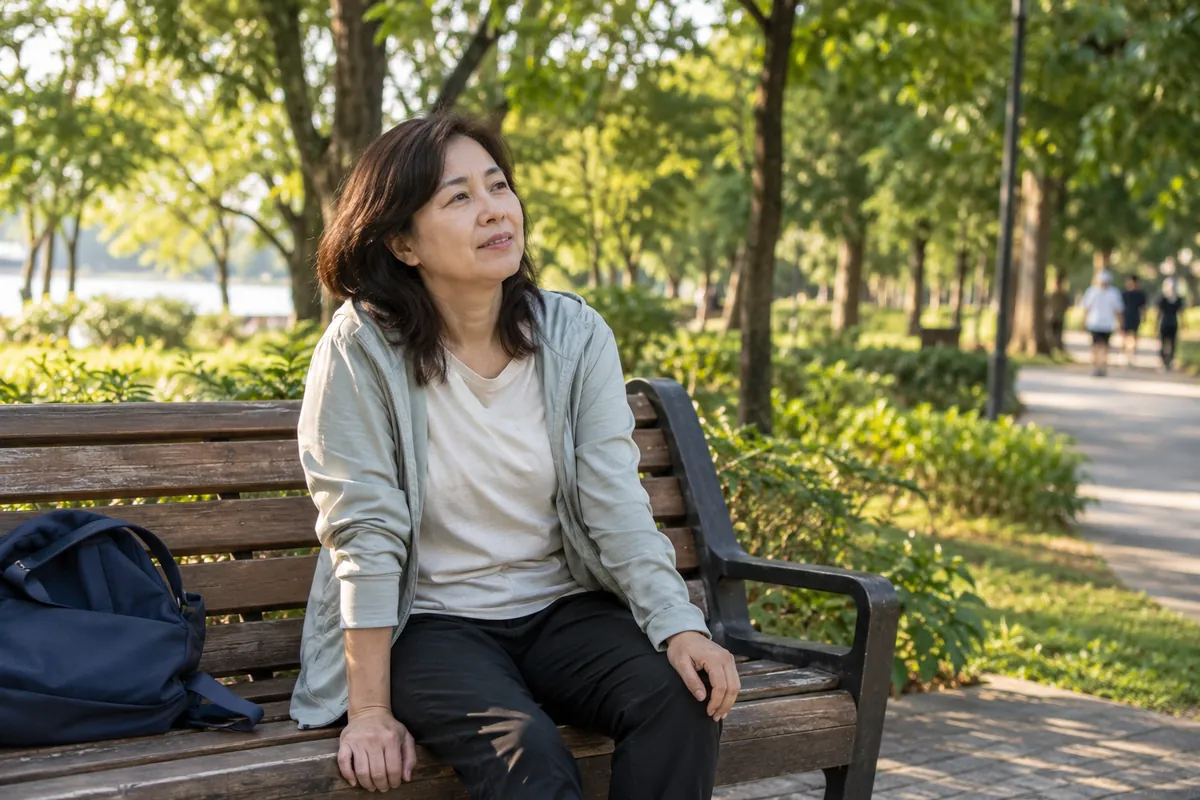
These target the causes you can change yourself. If the weakness persists without explanation, do these and book the blood tests from the last section at the same time; walk on both legs.
Eat enough protein. Keep the target simple: one quality protein portion at each meal. Reference points: an egg is about 7 g of protein, 30 g of meat, fish, or poultry about 7 g, half a cup of cooked beans about 7 g; tofu and low-fat milk count too. Anywhere from 10% to 35% of daily calories from protein is a reasonable range for healthy adults, and the older you get the more deliberate you need to be, because protein is the first thing sacrificed when appetite shrinks.
Put the muscles back to work. The WHO advises adults to get at least 150 minutes a week of moderate activity and stresses that muscle-strengthening work benefits everyone. Translated for someone feeling weak: resistance training 2–3 times a week, starting with your own body weight, chair-supported squats, a 30-second wall sit, heel raises in sets of 15, two or three sets each, plus 30 accumulated minutes of brisk walking a day. If you sit for work, get up and move for 2–3 minutes every hour. For the first two weeks, “finishing without misery” is the standard; err light, not heroic.
Sleep enough, on a fixed rhythm. Fix your wake time and bedtime and put sleep on the calendar; the NHS range for adults is 6–9 hours a night. Chronic late nights spend more than alertness; they spend the body’s repair time.
Get the iron right. Lean red meat, beans, and dark leafy greens are the everyday sources, and blood-based foods like black pudding are iron-rich too. Plant iron absorbs poorly, and pairing it with vitamin C (an orange, a few strawberries, a serving of broccoli) raises absorption noticeably. Women with heavy periods should take this one seriously.
Steady the blood sugar swings. Eat three regular meals, skip sweet drinks on an empty stomach, and avoid big servings of refined carbs eaten alone. The spike-and-crash itself is a source of weakness and tiredness.
TCM Methods
Five categories, and they stack. Start with the one or two easiest to keep up; there is no need to do everything at once.
Pressure Points and Self-Massage
Once a day, press with the pad of a finger until you feel a mild, bearable ache.
Zusanli (ST36), the shin point Location: about four finger-widths below the outer dip under the kneecap, one finger-width to the outside of the shinbone’s edge. Traditional use: the classic first point for strengthening the Spleen and supporting qi; a Chinese folk saying claims that pressing it regularly beats a nourishing chicken stew. Press 60 seconds per side, two rounds each.
Qihai (CV6), below the navel Location: about two finger-widths straight below the navel. Traditional use: the classic qi-supporting point. Warm your palms by rubbing them together, then circle gently over the point for 2–3 minutes before bed.
Sanyinjiao (SP6), the ankle point Location: four finger-widths above the tip of the inner ankle bone, just behind the inner edge of the shinbone. Traditional use: traditionally addresses the Liver, Spleen, and Kidney channels together, suiting weakness that comes with a poor complexion. 60 seconds per side. Do not use during pregnancy.
This set leans toward strengthening the Spleen and supporting qi, so it fits the qi-deficiency tendency best; people who run heavy and damp can press it too, paired with daytime movement. Contraindications: don’t press skin that’s broken, red, or swollen, and if you’re pregnant or managing a chronic condition, check with your doctor first.
Food Therapy
Chinese home-style track:
- Chinese yam and millet congee: 100 g fresh Chinese yam (shan yao, a pale, mild, starchy root sold fresh at Asian supermarkets, sometimes labeled nagaimo), peeled and cubed, simmered with 50 g millet and water into a porridge for breakfast. Chinese yam is a gentle everyday food traditionally used to strengthen the Spleen and support qi, suiting the Spleen-deficiency type.
- Red date and ginger drink: simmer 2–3 culinary red dates, split open, with 1–2 slices of ginger in 300 ml water for 10 minutes. This is an optional drink, not a fatigue treatment; omit ginger if it causes reflux.
- Adzuki bean and Job’s tears tea: 20–30 g each of adzuki beans (small red beans) and Job’s tears (also called Chinese pearl barley, sold as yi yi ren at Asian supermarkets or online), soaked ahead, then simmered in water and sipped as tea. Suits the heavy, damp-trapped type. Avoid Job’s tears during pregnancy.
- Cut three things: iced drinks and large amounts of raw food, greasy food, and heavy sweets. All three traditionally “bog down the Spleen and feed dampness,” and the damp-trapped type should cut them hardest.
Western everyday track:
- Pumpkin oatmeal: 40 g quick oats and 100 g pumpkin purée simmered in 300 ml of water or milk over low heat for 10 minutes, finished with a pinch of cinnamon, as breakfast. Oats and pumpkin are gentle, easy-to-digest staples that work the same strengthen-and-support direction as the congee, suiting the Spleen-deficiency type.
- Ginger and date chicken soup: 1 chicken leg (about 250 g), blanched, then simmered with 3 slices of ginger and 2 pitted dates over low heat for 40 minutes; add 1 chopped carrot and cook 15 minutes more. Eat the meat and drink the broth. A hot soup with ginger gently warms digestion, the same warming direction as the red date and ginger drink, suiting the too-tired-to-talk type; stop during a cold or fever.
- Lentil and sweet potato stew: 150 g cooked lentils, 200 g sweet potato cut into chunks, and half an onion, covered with water and simmered 20 minutes, light on oil and salt, as a side with a main meal. Lentils traditionally help drain dampness, the same direction as the adzuki bean tea, suiting the heavy, damp-trapped type.
- The same three cuts apply: iced drinks, fried food, and very sweet desserts are the Western pantry’s version of bogging down the Spleen, and the damp-trapped type should cut them hardest.
The food therapy as a whole leans toward strengthening the Spleen and supporting qi, suiting the qi-deficiency tendency; people who run heavy and damp should lead with the adzuki bean tea and the lentil stew and go easy on the warming items like the red date and ginger drink and the chicken soup. Everything here is a food-therapy use of culinary-grade ingredients; if you intend to use any of them as medicinal herbs, consult a licensed TCM practitioner first.
Emotional Care
The Suwen, in its chapter on pain, says “overthinking knots the qi”: prolonged rumination ties up the flow of qi and disrupts the Spleen’s digestive work. The everyday proof is simple. People with heavy minds often can’t eat, and what isn’t eaten or digested never reaches the limbs. Give the thinking an outlet: write down what’s on your mind during the day with a time assigned to handle it, deliberately walk fast on your walks, say it out loud to someone. The worst thing for digestion is worrying through a meal. Anyone can do this section, and it matters most for the qi-deficiency tendency and for people too worried to eat; no constitution needs to avoid it.
Movement and Exercise
If ordinary activity causes delayed worsening lasting days, stop increasing exercise and seek assessment. Persistent unexplained fatigue or fatigue affecting daily life warrants an appointment now; a self-care trial is not a prerequisite. See the fatigue topic’s care guidance.
- Baduanjin (Eight Pieces of Brocade, a traditional set of eight gentle exercises) has a move made for this article: “raise one arm to regulate the Spleen and stomach.” One hand presses up while the other presses down; alternate sides, 8–10 reps each, in the morning or before meals.
- Tai chi: research summaries by the U.S. NCCIH suggest tai chi helps improve balance and stability in older adults, which makes it a good fit for anyone whose soft legs come with a fear of falling. Two or three sessions a week, 20–30 minutes each.
- A 10–15 minute walk after meals: the traditional “hundred steps after eating,” and from the modern angle it also smooths the post-meal blood sugar curve.
- When the weakness is severe, start at the lowest intensity and use “no more tired the next day” as the ceiling.
The qi-deficiency tendency should start low and slow, walking and Baduanjin first, never heroic; those who run heavy and damp need enough volume to break a light sweat, because dampness doesn’t move without it.
Sleep and Daily Rhythm
- Three meals at fixed times, with breakfast ideally between 7 and 9 a.m. On the Chinese body clock, that is when the stomach channel is on duty, and tradition holds food is digested most easily then.
- Asleep by 11 p.m. The Suwen also says “overwork spends qi”: chronic overwork and late nights let qi flow out with nothing coming in, and the weakness only deepens.
- Nap 20–30 minutes at midday; past half an hour you tend to wake up groggier than before.
Fixed meals and early sleep are replenishing for the qi-deficiency tendency and basic for everyone else; there is no constitution that needs to avoid this one.
A One-Week Weakness Diary
Seven days of notes will show you what your weakness follows. Take two minutes each evening to record:
| What to record | Example |
|---|---|
| Strength score (0–10) | 5 (0 = no strength at all, 10 = full power) |
| Three movement tests | Carry a 5 kg bag of rice 10 meters / climb two flights of stairs / stand up from a chair 5 times without using your hands. Which one is hard? |
| Protein at each meal | Egg at breakfast, meat at lunch, only greens at dinner |
| Sleep | 11:30 p.m.–6:30 a.m., woke once |
| Movement and sitting | 20-minute brisk walk / sat 4 hours straight |
| Stool and appetite | Loose, bloated after meals / normal |
Look back after a week: on your lowest-scoring days, was the night before short, the protein missing, or the whole day spent in a chair? If the test movements get easier week by week, the direction is right. If four weeks pass with no change, or things are getting worse, take this diary to a doctor. It is far more useful than “I just feel weak.”
How Long Until You See Improvement
Use the dates in your plan as review points, not promises of recovery. Responses to sleep, food and activity changes depend on the cause of fatigue and your circumstances. There is no established recovery timetable for the acupressure or food-therapy suggestions here.
- Review your notes weekly: compare sleep, daytime energy and the effects of activity. One better day does not identify a cause.
- Watch for delayed worsening: if ordinary activity brings a marked decline hours to a day or two later that lasts for days, reduce the load, stop increasing activity and seek assessment. Do not push through a fixed exercise plan.
- Arrange care when needed: unexplained fatigue lasting weeks or affecting daily life warrants a medical appointment. Do not wait to complete a diary or self-care trial; worsening symptoms or the warning signs below need earlier attention.
See NHS advice on fatigue and CDC guidance on post-exertional malaise.
When to See a Doctor
Emergency (stroke, every minute counts): if weakness arrives suddenly, concentrates in one arm or leg, or comes with a drooping mouth, slurred speech, vision problems, or a severe headache, call emergency services immediately. The most effective stroke treatments are only available within hours of onset. Even if the symptoms pass within minutes on their own (a transient ischemic attack), get seen the same day; it is stroke’s warning shot (CDC).
Book an evaluation soon:
- Weakness that keeps worsening over weeks to months, with muscle twitching or muscles visibly thinning; a neurologist needs to rule out nerve and muscle diseases;
- New weakness in an older adult, with obvious weight loss and fading appetite;
- Weakness with pale skin, a racing heart, or shortness of breath; anemia needs ruling out;
- Weakness with marked thirst, frequent urination, and weight loss; diabetes needs ruling out;
- Weakness with feeling cold, constipation, weight gain, and dry skin; an underactive thyroid needs ruling out;
- Weakness with a low mood and loss of interest lasting more than two weeks; depression needs ruling out.
Don’t stop medication on your own: if you’re taking a statin or any other drug and the weakness started after you began it, tell your doctor and let them decide whether to switch or adjust the dose.
This article is general health education and can’t replace a doctor’s diagnosis or individualized advice.
To sort out whether you’re dealing with weakness, sleepiness, or full-on fatigue, read the companion piece why am I always tired and have no energy; the complete framework for tiredness lives at the fatigue hub; and for the constitution framework itself, read the nine TCM constitution types.
Weak all the time, but which way does your body lean?
The same bone-tired weakness can come with a poor appetite and loose stools, with a pale face and a fluttering heart, or with a body that feels poured from lead, and each direction calls for a different daily routine. The free constitution test shows your tendencies across nine traditional body types and helps you find a sensible starting point. It's a self-observation tool, not a medical diagnosis.
References13 sources
- 01
UK National Health Service (NHS)
- 02
MedlinePlus, U.S. National Institutes of Health
- 03
U.S. National Institute of Diabetes and Digestive and Kidney Diseases (NIDDK / NIH)
- 04
American Thyroid Association (ATA)
- 05
NIH Office of Dietary Supplements (ODS)
- 06
MedlinePlus, U.S. National Institutes of Health
- 07
MedlinePlus, U.S. National Institutes of Health
- 08
MedlinePlus, U.S. National Institutes of Health
- 09
U.S. National Heart, Lung, and Blood Institute (NHLBI / NIH)
- 10
U.S. Centers for Disease Control and Prevention (CDC)
- 11
World Health Organization (WHO)
- 12
U.S. National Center for Complementary and Integrative Health (NCCIH / NIH)
- 13Huangdi Neijing: Suwen (The Yellow Emperor's Inner Classic: Basic Questions)
Classic of Chinese medicine, ~2nd century BCE
Personalized guidance
Use the app for constitution-friendly ideas and structured plans when available.
Download the App
Get personalized TCM health recommendations