Menopause Brain Fog: Real, Measurable, and Mostly Reversible
Brain fog in perimenopause is supported by research — attention and processing speed dip, yet SWAN found no link to long-term decline. The three amplifiers (sleep, flashes, mood), plus offloading systems that work.
By WellTao · Published: · Editorial Policy
More articles in this topicTable of contents

The Short Answer First
Menopausal brain fog — scattered attention, a brain running slow, words that won’t surface — is research-supported and genuinely measurable, not imagined. A 2024 systematic review in Menopause collects the evidence: menopausal women’s self-reported cognitive complaints rise sharply, and objective testing shows mild dips in attention and processing speed. More important is where it goes: the decades-long SWAN cohort found the cognitive dips of the menopause transition do not connect to long-term decline — once the transition ends, cognition returns to the normal age-matched track.
In other words, this stretch of “my brain isn’t working” is closer to a temporary, recoverable dip in function than to early dementia. The path follows cleanly: press down the three amplifiers — sleep, hot flashes, mood — the direct fuel of brain fog, and add cognitive load management (externalize, single-task, build a capture system). When symptoms already wreck work and life, or the slide looks too fast for your age, it’s evaluation time (see when to see a doctor).
The Four Faces of Brain Fog
- The lost word: mid-sentence, the word won’t land; “that thing” and “that name” replace the word you were reaching for.
- The wandering focus: a page read three times over; twenty minutes into a meeting, your mind has wandered off.
- The thin short-term memory: walk into a room and forget why; yesterday’s small promise gone without a note.
- The slow switch: questions you used to answer in a second now need a buffer; multi-task handoffs are where you stall.
All four can arrive together, but the first two usually bite hardest. One verdict worth pinning up: brain fog’s cost is its intensity multiplied by how badly you’ve been sleeping — the same fog scores 2 when sleep is good and 8 when it isn’t. That’s also why the fix-it order below starts with the amplifiers.
What Modern Medicine Says
The evidence. The 2024 review lands on: menopausal brain fog is a real experience, subjective and objective signals agree; the changes track estrogen’s fluctuations (estrogen contributes to the brain’s energy metabolism and neural connectivity) and correlate strongly with flash frequency, sleep quality, and mood. The review also stresses: these dips sit at the level of function — attention, processing speed — an order apart from the scales used to assess dementia.
Why “not feeling like yourself” checks out. SWAN’s long cognitive tracking delivers the two most-useful conclusions:
- Cognitive measures do dip temporarily during the transition, especially late perimenopause;
- After menopause they return to age-matched levels — the researchers’ takeaway being that the transition’s cognitive changes are a time-locked phenomenon of the transition itself, decoupled from longer-term decline.
For anyone being dragged through days by fog, that’s the sentence to keep: the brain is downshifting for the stretch, not breaking down.
Why the amplifiers matter most. The review names flash frequency, sleep loss, and low mood as the strongest associates of brain fog — and every one of the three is also more manageable than fog itself. So the real entrance to “treating brain fog” is managing flashes, repairing sleep, and steadying mood, not hunting a brain supplement.
An honest word on medication. No approved drug treats brain fog. Hormone therapy shows cognition-related findings in some studies, but the review’s conclusion is that the evidence doesn’t support starting it for the purpose of fog (overall needs may land it as a side benefit when a doctor evaluates anyway). Any “nootropic” or “brain booster” marketing has no prescription behind it; confirm starting or stopping anything with your doctor.
How Chinese Medicine Reads "A Cloudy Mind"
Tradition has no word for brain fog. The nearest classical territory is in disturbed function of “the heart governing the spirit” and concepts like “marrow sea insufficiency,” running three main routes:
- Heart and spleen both deficient: over-thinking drains heart blood and spleen energy — forgetfulness, palpitations, thin sleep, poor complexion; tradition’s “too much thinking, not enough blood to feed the mind.”
- Liver stagnation with phlegm mist: long-standing emotional constraint, stuck qi flow and fluid turning to phlegm — a heavy, “wrapped in gauze” head, usually coming with mood trouble.
- Kidney essence insufficiency: “the brain is the sea of marrow”; as kidney essence wanes, memory and thinking follow — part of the stage’s overall “kidney qi waning” picture.
What the three share: the tradition doesn’t treat fog as “the brain is broken”; it asks “is what’s being supplied enough, and is the flow moving” (traditional model; the modern evidence boundary sits in NCCIH’s overview).
Constitution links: qi deficiency (the heart-spleen, daytime-energy type), qi stagnation (the mood-accompanied type), yin deficiency (the heat-and-agitation type). Tendency informs pattern in one direction; with rapid decline or obvious executive-function change, the medical line comes first, always.
Make Your Brain Reliable Again
Three load-management principles:
- Outsource the thinking: calendars and lists replace “holding it in your head” — every commitment goes into a capture app on the spot (the brain is a poor place to store to-dos). The point: fog’s capacity dip is real; external systems aren’t laziness, they’re adaptation.
- One-task windows: end ” emailing during meetings.” The review’s processing-speed dips show most sharply at task switching; single-task flow is the most direct protection.
- Decode your fatigue hours: track which hours of the day your brain is clearest (mornings for most people) and schedule the cognitively heavy work there; routine chores (email, approvals) go into the “fog hours.”
Amplifier management, in order:
- Sleep first — one lost night of deep sleep is four-to-six hours of degraded cognition the next day; follow the perimenopause insomnia plan.
- Flashes second — the NIA’s flash-management list (trigger hunt, environmental cooling, weight and exercise); a low-flash day is a clear-headed day.
- Mood third — anxiety’s running drain is cognitively expensive; follow the mood article’s playbook, and evaluate if needed.
Movement and food (the long floor): 150 minutes weekly of moderate aerobic work plus two strength sessions is among the most replicated self-help interventions in cognition research; a Mediterranean-style plate (fish, olive oil, vegetables, whole grains) and moderate caffeine (mornings only) as support. None of this targets fog alone — it improves sleep, mood, and the cardiovascular base that long-term cognition rides on. The steadiest win-win there is.
Chinese Medicine Methods
Five categories for perimenopausal brain fog, each marked with the tendency it suits and cautions. Food therapy uses food amounts; consult a practitioner before using any ingredient as a medicinal herb.
Acupressure
One round in the morning and one in the afternoon; 60 seconds per point:
- Baihui + the Four Alertness points (Baihui sits where the line across the ear-tops crosses the head’s midline; the four points sit one finger-width front, back, left, right of it): the traditional “raise yang, open the orifices, settle the spirit” combination for muzzled, wandering heads — press Baihui 60 seconds, then each of the four for 30; finish by combing the hair ten times with your fingertips, front to back.
- Zusanli (four finger-widths below the outer knee): traditionally “cultivates the acquired foundation” (the spleen and stomach, the source of qi and blood); morning, both sides, 60 seconds, for the heart-spleen type.
- Taixi (hollow between the inner ankle and Achilles tendon): the kidney meridian’s source point, traditionally supporting the “sea of marrow”; morning and evening, 60 seconds each.
Food Therapy
Eastern-style:
- Chinese yam millet porridge: 80g Chinese yam, 40g millet, simmered 30 minutes; four breakfasts a week. Traditionally builds spleen and stomach to generate qi and blood — the long-run staple for the heart-spleen type; tighten the portion if blood sugar is a concern.
- Goji and chrysanthemum tea: 10 goji berries with 3 white chrysanthemum flowers, steeped 3 minutes at 80°C, warm in the morning. Traditionally nourishes liver and kidney and clears deficiency fire — for office hours when eyes dry out and the head grows heavy by afternoon.
- Black sesame and walnut powder: grind equal parts together; one spoon in milk or over porridge at breakfast — the classic “fill essence, benefit the intellect” combination; one jar lasts two weeks. The full method lives in walnut sesame porridge.
Western-style:
- Blueberries and dark leafy greens, daily: berries and leafy vegetables (spinach, kale) recur across dietary cognition research; the easy form is half a cup of blueberries plus one leafy salad at lunch.
- A protein-anchored breakfast: eggs or 150g Greek yogurt plus whole grain — morning cognitive stability wants the “early protein” baseline.
- Omega-3 deep-sea fish two to three times weekly: salmon and sardines in rotation; steamed beats fried for dinner.
Attention Care
- Fewer tasks: review weekly which one thing you can stop doing — at this stage, each avoided switch is a saved tax.
- Ten minutes of focused breathing: a fixed morning or afternoon slot, gathering attention onto one breath at a time; mindfulness training carries supportive evidence for attention function.
- Light socializing twice weekly: conversation itself demands focus and word-finding — among the cheapest cognitive training there is.
Movement
- Brisk walking or swimming five times a week, 30 minutes: exercise directly raises cerebral blood flow and neurotrophic factors — the first choice among cognitive self-help options.
- Baduanjin qigong, 15 minutes daily: the full sequence with matched breathing; remembering the movements is itself gentle word-and-order training — a good mid-morning break.
- Strength twice weekly: tied into metabolism and sleep, and back-stopping the cognitive floor.
Sleep and Routine
- Fixed wake time plus 10 minutes of daylight (the body clock is the foundation of sleep quality, and sleep is fog’s amplifier).
- Caffeine ends by 2pm; no alcohol at night — both are on the NIA’s sleep list.
- Naps 20–30 minutes, nothing after 3pm; during fog hours it’s fine to split a task into two short runs — don’t fight your own clock.
All four fog profiles share one main lever: managing the amplifiers. A fading memory usually isn’t “bad memory” — it’s the stacked bill of sleep, flashes, and mood. The free constitution test at the end of this article can show you which tendency you lean toward — a self-observation tool, not a diagnosis.
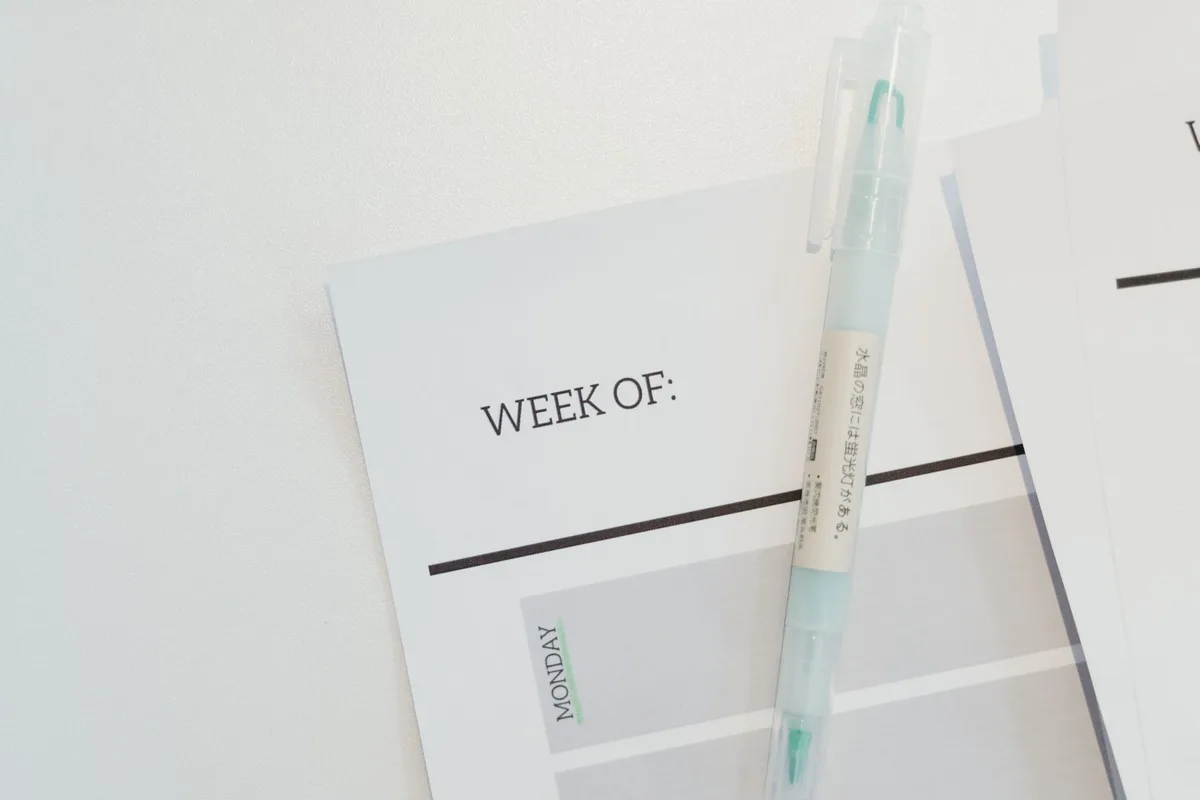
The Four-Week Cognition Log
Once a week (five minutes on Sunday evening), four weeks running:
| Entry | Record |
|---|---|
| Word-finding failures this week | roughly how many (>10, write “many”) |
| Most frequent work slip | missed detail / slow handoff / scattered focus / can’t articulate |
| Average nightly sleep & wakings | ×h / × times |
| Flash days this week | × days |
| Overall mood score | 1–5 |
| Management actions done | sleep / exercise / flashes / mood (each yes/no) |
After four weeks, read three lines: how fog severity correlates with sleep and flash days (high → the amplifiers are the main battlefield; keep pressing); a week-over-week worsening trend (sustained → raise the priority of evaluation); do “forgetting” slips cluster in high-pressure weeks (yes → offloading and load-cutting are your levers). When you hand this to a doctor, lead with the slip type that hurts work most, then the associated factors.
How Long Until It Helps
- Offloading (lists and external memory): same day — a first slice of reliability returns immediately; the most valuable move of week one.
- Sleep repairs: the change with the least lag — the week sleep quality improves, most people feel the brain “come back online.”
- Flash management: weeks to months; fewer daytime waves directly repair attention blocks.
- Exercise and dietary change: four weeks to the first checkpoint; cognition effects accumulate over the long run.
- Food therapy and constitution work: a two-to-four-week observation span, measured by the length of your clear morning window.
- Expectation setting: SWAN shows cognition returning to normal once the transition ends — the strategy is “press the amplifiers first, let the phase pass while you do.” If the subjective slide still deepens after four weeks and sleep and flashes are ruled out, it’s evaluation time.
When to See a Doctor
- The speed or pattern of decline is off: changes obvious to neighbors and colleagues within six-to-twelve months; or losses that cross the normal adaptation line (can’t operate a tool you were fluent in; getting lost in familiar places).
- Safety and basic life affected: leaving the stove on; unable to complete a familiar work process.
- Riding with mood problems past two weeks: depression also produces pseudo-cognitive decline — sort that first (treating mood is treating cognition).
- Family history of early dementia or high cardiovascular risk: say so up front; it makes evaluation more proactive.
- The normal range for this stage: mild, fluctuating, tied to sleep and flashes, compensable with tools — that’s the common perimenopausal shape. The work is managing the amplifiers, not panicking.
This article is general health information, not a substitute for diagnosis or individualized advice.
Common Questions
I’m 48 and forgetting things more. Is this dementia?
At 48, the most likely explanation is brain fog, not dementia. The distinguishing features: fog declines with fluctuation (clear days still exist), dementia declines progressively and in one direction; fog compensates with sleep and tools, and dementia’s slips break through any compensation. For further reassurance, take your log for a formal evaluation — it beats guessing. The headline is already above: transition-era cognitive changes are decoupled from long-term decline (SWAN data).
Which “brain boosters” are worth buying?
Honest answer: none. No approved drug or supplement treats brain fog; the review finds a lack of support for popular nootropic ingredients; anything marketed as brain-boosting should be cleared with a doctor or pharmacist (several interact with prescription drugs). Spend the self-help budget on the two best-evidenced things — sleep and exercise. The expected return beats any supplement’s.
Will the fog last into postmenopause?
For most people the outcome is “markedly better” — SWAN’s finding is cognition returning to age-matched levels after the transition. The speed of relief varies individually, and how the trip through the transition feels depends on managing the sleep + flashes + mood trio. If decline persists years after menopause, back to evaluation for new causes.
For the wider stage, read the menopause hub; for sleep, see perimenopause insomnia; for mood, see perimenopause mood swings; for the no-energy layer, start with menopause fatigue.
The foggy type that comes with worry and the type that comes with fatigue run on different traditional patterns
The free constitution test maps your tendencies across nine traditional types and pairs well with the four-week cognition log below. For self-reflection, not medical diagnosis.
References4 sources
- 01
Menopause (journal), 2024
- 02
Neurology / PubMed Central
- 03
U.S. National Center for Complementary and Integrative Health (NCCIH / NIH)
- 04
U.S. National Institute on Aging (NIA / NIH)
Personalized guidance
Use the app for constitution-friendly ideas and structured plans when available.
Download the App
Get personalized TCM health recommendations