What Foods Help With Constipation? Fiber, Water, and a Realistic Day of Eating
The two things that actually move the needle are fiber and fluids, added together and added gradually. What softens stool, how much fiber to aim for, how to ramp up without bloating, and when food alone isn't the answer.
By WellTao · Published: · Editorial Policy
More articles in this topicTable of contents
The short version
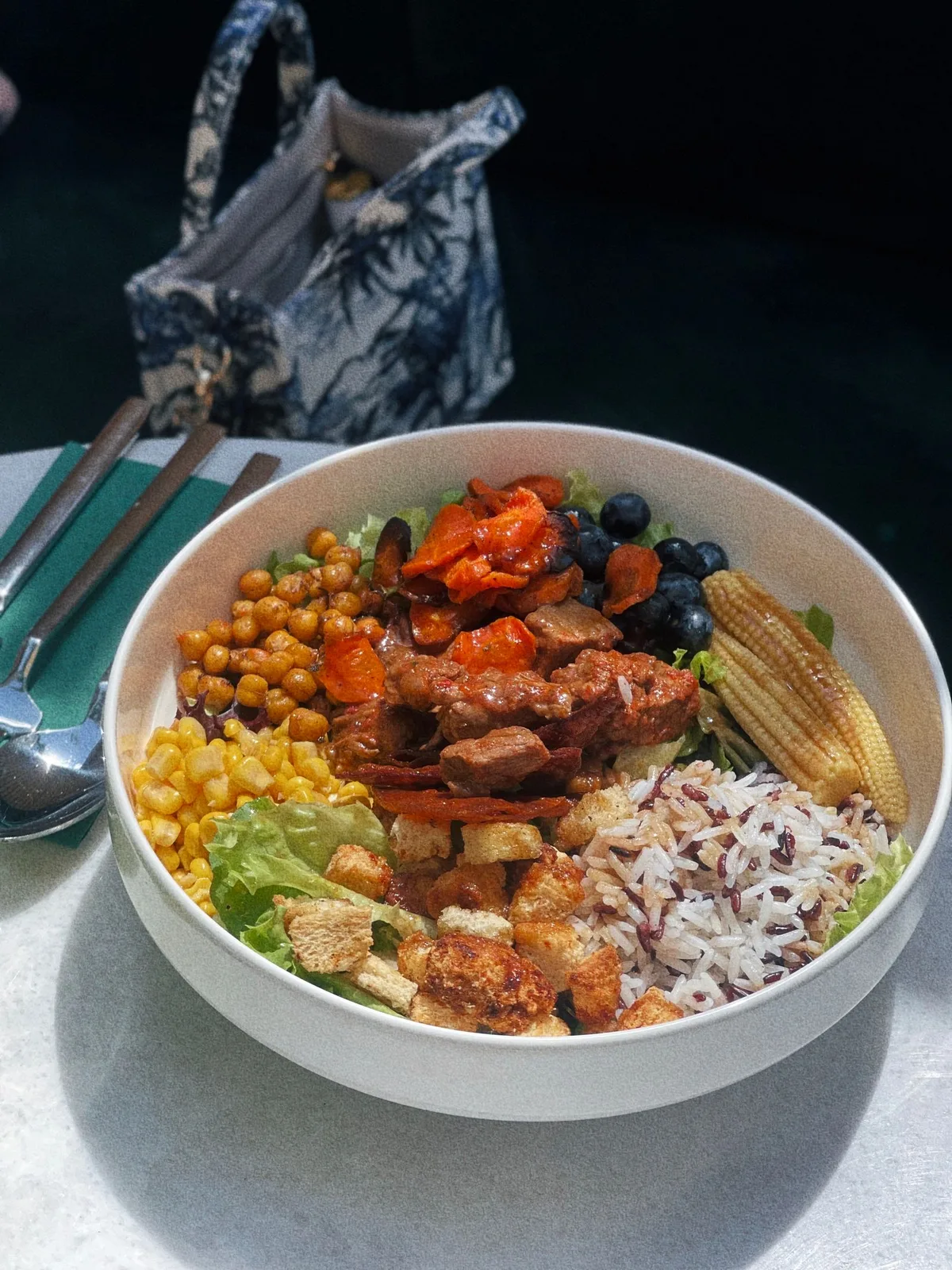
For many people, food changes start with getting enough fiber and fluids. NIDDK’s reference range for adults is 22 to 34 grams of fiber a day from whole grains, legumes, fruit, and vegetables. Fluids help fiber work and help prevent dehydration; individual fluid needs vary, so more water is not automatically better.
Two boundaries up front. Dietary change suits the common kind of constipation: fewer bowel movements, hard dry stools. It works on a timeline of days to weeks, so it’s not an emergency fix. And if you already have significant abdominal pain, vomiting, blood in your stool, or you can’t pass gas at all, don’t try to eat your way out — go straight to when to see a doctor.
Is food your fix
Check which column you’re in:
- Diet is likely the lever: hard, pellet-like stools, straining, and a recent track record of few vegetables, little whole grain, not much water. This kind responds best to food changes.
- Diet alone won’t cut it: you go every day but never feel finished, your stool isn’t hard yet won’t come out, or bloating overshadows the constipation. Those point to motility or coordination issues, where food is a supporting act.
- Skip diet tinkering for now: constipation with persistent pain, vomiting, blood in the stool, or unexplained weight loss. See a doctor first, adjust later.
NIDDK’s description of constipation covers fewer than three bowel movements a week, hard or lumpy stools, difficult or painful passage, and a feeling of incomplete emptying. If the first two fit and no red flags apply, read on.
What modern medicine says
Why fiber works: two types, two jobs. Insoluble fiber (whole grains, vegetable skins) passes through undigested, physically adding bulk that prods the colon to move. Soluble fiber (oats, beans, apples) absorbs water and forms a gel that keeps stool soft. The colon’s day job is pulling water back out of food residue — the slower the transit, the drier the stool. Fiber counters that on both fronts: it holds water in, and it hurries things along.
Why you have to ramp up slowly. Once fiber reaches the colon, bacteria ferment it and produce gas. Jumping from 10 grams a day to 30 means the gas arrives before the relief does. NIDDK specifically advises adding fiber a little at a time; the pacing schedule is in the timeline section below.
Water isn’t “more is better” — it has to pair with fiber. Soluble fiber needs water to swell and soften. But beyond that, flooding yourself with water doesn’t reach the stool; it just means more bathroom trips of the other kind. The practical rule is in the next section.
How strong is the evidence. A 2024 systematic review of foods, drinks, and diets for chronic constipation found something useful: specific foods (kiwifruit, prunes, rye bread) have decent trial support, while generic “high-fiber diet” advice is surprisingly inconsistent. Eating the right few foods beats chanting “more fiber.”
How Chinese medicine understands it
In the traditional Chinese medicine (TCM) framework, a bowel movement is the last step of a three-part production line. Step one is “receiving and ripening”: the Stomach takes in food and does the rough breakdown — picture unloading and coarse processing. Step two is “transformation and transport”: the Spleen distributes the extracted nutrients and fluids around the body, including the share budgeted for lubricating the intestines — picture shipping and logistics. Step three is “conduction”: the Large Intestine reclaims just enough water from the residue and pushes the formed stool out. Constipation can stall at any step: too little fluid allocated (dry stool), too little drive from logistics (won’t move), or a disrupted rhythm (unpredictable timing). The roughly 2,000-year-old Basic Questions (Suwen) puts the dietary side in one line: “when food and drink double themselves, the stomach and intestines are harmed.” Eat past your capacity to process, and the gut pays first.
The framework adds one more link worth knowing: traditional theory pairs the Lung with the Large Intestine (“interior-exterior” partners), which ties bowel movements to breathing rhythm — a long, full exhale drops the diaphragm and gently compresses the abdomen. That’s why traditional care for constipation was never just about food; breathing, mood, and daily routine are part of the package, and that’s where the five method categories below come from. This three-step model is a traditional empirical framework, not a modern anatomical diagnosis (for an overview of TCM and the state of its evidence, see NCCIH’s TCM page).
Within this framework, constipation sorts into three common eating-related patterns:
- The dry kind: hard pellet stools that hurt to pass, low water intake, dry skin, chapped lips. Traditionally called “intestinal dryness,” this is a lubrication-budget problem. The dietary direction is moistening: congee, soups, sesame, honey — foods with a slippery texture — and less of the parching stuff (chili, alcohol, fried food).
- The underpowered kind: the stool isn’t necessarily dry, but passing it is effortful and never feels complete; you’re tired in general, your voice runs low, and you get drowsy after meals. Traditionally “qi deficiency failing to push.” The direction is warm, soft, cooked food and three regular meals — a sudden pile of raw, coarse fiber just adds load.
- The stress-stuck kind: constipation that syncs with busy, pressured weeks, with bloating and burping that ease after a sigh or passing gas. Traditionally “qi constraint” — the schedule, not the cargo. Here, how you eat matters as much as what: rushed meals at a desk jam the system before the food even arrives.
The traditional constitution framework uses categories like the qi-deficiency constitution, yin-deficiency constitution, yang-deficiency constitution, and qi-stagnation constitution to describe everyday tendencies. The link runs one way: a yin-deficiency leaning means watching for dryness patterns in daily life, not that dry stool proves you’re “yin deficient.” The same person can carry a mix of patterns, and the mix shifts with sleep, diet, and season; formal differentiation takes an in-person TCM practitioner.
Everyday adjustments
Here’s NIDDK’s framework turned into an actual day:
- Add a soluble-fiber breakfast. 40–50 g of oats cooked as porridge or soaked in milk, or a slice of whole-grain bread with an egg. Oats are the gentlest high-fiber first step.
- Fill half the plate with vegetables or fruit at each meal. No weighing needed. Pick the high-fiber options NIDDK lists (broccoli, carrots, peas), and eat fruit with the skin on (apples, pears) — the fiber lives in and under the skin.
- Add legumes twice a week. Lentils, chickpeas, or black beans in soup or salad, half a cup to a cup each time. Legumes are the densest everyday fiber source and the gassiest — start with half a cup.
- Pair fiber changes with fluids as needed. If you’re adding high-fiber foods and are not drinking enough, include a glass of water (about 250 ml) or another suitable fluid. This is a practical example, not a required one-to-one rule; follow any fluid limits set by your clinician.
- Ramp up gradually. One possible approach is to change breakfast first, then add vegetables and legumes over time. Adjust the pace to your comfort; if bloating increases, pause or reduce the latest change.

TCM methods
The five categories below give concrete steps for this problem, each marked with the constitution tendencies it suits or calls for caution. Everything in the food section is a food-therapy use of culinary ingredients; if you intend to use them as medicinal herbs, consult a licensed TCM practitioner.
Acupressure and self-massage
Do this an hour after a meal or before bed. Press with a fingertip pad, firm enough for a mild, bearable ache — pain is not the goal. A good order: abdomen first to warm up the system, then the limb points:
- Tianshu (ST25): about three finger-widths to either side of the navel, 60 seconds per side. Traditionally the most-used point for regulating the Large Intestine’s conduction. Acupuncture at Tianshu has randomized-trial support for functional constipation (see this analysis pooling 10 trials), but those studies used practitioner-administered needling — pressing it yourself is not the same intervention.
- Zhigou (TE6): on the back of the forearm, about four finger-widths above the wrist crease, in the groove between the two bones. Traditionally the go-to empirical point for constipation; 60 seconds per side, with an extra round before a bathroom visit being the traditional use.
- Zusanli (ST36): about four finger-widths below the outer hollow under the kneecap, one finger-width to the outside of the shinbone. Traditionally supports the Spleen and Stomach; 60 seconds per side, a good long-term point for the underpowered kind.
- Belly rub to finish: rest a palm on your abdomen and slowly stroke along the colon’s path — lower right, up the right side, across the top, down the left — for 3–5 minutes, with just enough pressure to move the tissue under the skin. The direction matters: reversed, you’re pushing contents backward.
Cautions: pregnant women should not press abdominal points or do the belly rub; skip over unhealed abdominal surgery, hernias, or any known abdominal mass; stop if pressing hurts. If you lean qi-deficient, halve the pressure but keep the duration; yin-deficiency doesn’t call for more force.
Food therapy
Chinese home-style track (ingredients at Asian supermarkets or online):
- Walnut-sesame porridge: grind 15 g walnuts and 15 g toasted black sesame seeds, simmer with 30 g rice in 400 ml water into a soft porridge, and eat warm for breakfast. Traditionally moistens intestinal dryness without being harsh — the classic gentle choice for the dry kind and yin-deficiency leanings. Skip during diarrhea; avoid entirely with nut or sesame allergies. See the full recipe in walnut-sesame porridge.
- Sweet potato and millet congee: 100 g peeled sweet potato chunks and 40 g millet simmered in 500 ml water for 30 minutes. Sweet potato is traditionally neutral and “widens the intestines”; millet is gentle on the Stomach. Suits the underpowered kind and yang-deficiency leanings, as dinner or breakfast.
- Chenpi-honey water: steep 3 g dried tangerine peel (chenpi) in 300 ml warm water for 10 minutes, then stir in 1 teaspoon honey. Traditionally chenpi moves qi while honey moistens the intestine — the stress-stuck kind’s drink. If you run dry-mouthed (yin-deficiency leaning), drop the chenpi and keep the honey water. Not for people managing blood sugar; honey is never for infants under one.
Western everyday track:
- Overnight oat cup: 50 g oats, 1 tablespoon (about 10 g) chia seeds, and 150 ml milk or soy milk refrigerated overnight, topped in the morning with half a pear, skin on, chopped. Soluble fiber plus water, the Western answer to the dry kind’s congee.
- Roasted vegetables with white beans: 150 g pumpkin and 100 g carrot chunks roasted at 180°C for 25 minutes, served over half a cup of cooked cannellini or chickpeas with 1 teaspoon olive oil. Roasted vegetables are gentler than raw salads — yang-deficiency leanings included.
Emotional care
For the stress-stuck kind, eating pace outranks food lists. Give each meal 15–20 minutes, sitting down, no screen, no clock-watching. Chewing is the first workstation of the production line: chew each mouthful 15–20 times before swallowing, because wolfing food down hands the gut a half-processed load. Before the meal, take three slow belly breaths (inhale 4 seconds, exhale 6) — in the traditional frame this is the everyday version of “descending Lung qi to help the bowels move.” If you lean toward qi-stagnation, start with just this one thing, “eat attentively,” and give it two weeks before judging.
Movement
A 10–15 minute walk after meals is gentle activity that encourages gut motility and helps move residue downward; keep the pace at “can talk in full sentences.” NIDDK’s everyday measures put regular activity and dietary change side by side. If you lean qi-deficient or yang-deficient, start with 5–10 minutes of flat walking; yin-deficiency leanings call for a light glow, not a sweat. On high-bloating days, skip crunch-type abdominal work and walk instead.
Sleep and daily rhythm
- Three regular meals, and don’t skip breakfast. Eating in the morning triggers the gastrocolic reflex, the strongest motility window of the day; skipping breakfast wastes a free nudge.
- Hold a 15–45 minute bathroom window after breakfast. Go when you feel the urge, and don’t bring your phone in for a long sit. No urge means get up — no loitering.
- Dinner to 70% full, finished 3 hours before bed. The gut needs a night shift off for the morning reflex to stay sharp.
Same problem, three patterns, three directions — that’s exactly what the traditional constitution framework is for. If you’d like to know which way you lean, the free constitution test below is a reference point; it’s a self-observation tool, not a diagnosis.
A one-week food and bowel log
The classic trap in dietary change is changing five things at once and learning nothing. Track one week, one minute a day, four entries:
| What to record | Example |
|---|---|
| Today’s fiber sources | Oat breakfast + broccoli + half a cup of lentil soup |
| Rough water intake | 6 glasses |
| Stool form | Hard pellets / formed but dry / soft and formed |
| Bloating | None / mild / noticeable |
After a week, look back. Softer stool but obvious bloating means the fiber ramp was too fast — drop back a notch. No change in stool and no bloating means the dose isn’t there yet — step up. More regular but still never feeling finished points away from diet; read how long is too long without pooping or check with a doctor.
Note: this is a self-observation tool, not a diagnostic scale. It shows you the food-bowel connection; it can’t tell you what disease you have.
How long until you see improvement
- Hydration fixes: same day to two or three days; hard dry stool softens first.
- Fiber and fluid changes: some people notice changes within days, while others need longer or do not improve with diet alone. The response varies.
- Food and self-care approaches: use the log to notice your own response over time; it does not predict when symptoms will improve.
If a change is uncomfortable, adjust it rather than continuing to add more. Seek medical advice if symptoms persist, worsen, or keep disrupting daily life.
When to see a doctor
Get professional evaluation first if any of the following apply — don’t rely on diet alone:
- Blood in the stool or black tarry stools, unexplained weight loss, or persistent fatigue;
- Persistent or worsening abdominal pain, vomiting, fever, or a complete inability to pass gas — these warrant prompt care;
- A sudden change in bowel habits, especially new after age 40;
- Constipation that persists despite self-care, worsens, or keeps disrupting daily life;
- You’re on medication that can cause constipation (opioid painkillers, iron supplements, some antidepressants). Don’t stop them on your own — NIDDK’s list of medication causes shows how common this is; raise it with your doctor.
This article is general health education for healthy adults. Pregnancy, children, post-surgery recovery, and chronic illness each need individualized guidance. This article can’t replace a doctor’s diagnosis or advice.
Common questions
Do bananas help or hurt?
It depends on ripeness. A fully ripe banana (brown-spotted skin) offers soluble fiber and a soft texture — mildly helpful for hard stools. An underripe banana is high in starch and tannins, and both traditional practice and modern observation suggest it can make constipation worse. When in doubt, go ripe, or just pick a pear or kiwifruit instead.
Does honey water work?
Honey is mostly fructose, and in people who absorb fructose poorly it has a mild osmotic effect — real, but highly individual, so it can’t be a universal recommendation. In traditional food therapy, honey water is a standard “moisten the intestine” drink for the dry kind. Not for anyone managing blood sugar, and never for infants under one (botulism risk).
Should I take a fiber supplement?
Food first. If diet alone can’t reach the target, psyllium husk has the most research support among soluble-fiber supplements — start at a low dose, drink plenty of water with it, and keep it at least two hours away from medications. If you’re on medication or have a bowel condition, ask your doctor or pharmacist first.
For the fuller picture, see the constipation hub; if bloating comes with your constipation, the strategy differs — read what to eat when constipated and bloated.
Same fiber, different results — here's why
One person thrives on congee, another bloats on the same bowl. Traditional Chinese medicine attributes much of that difference to constitution tendencies. The free constitution test shows where you lean across nine traditional types, and pairs well with the food-and-bowel log in this article. It's a self-observation tool, not a medical diagnosis.
References8 sources
- 01
U.S. National Institute of Diabetes and Digestive and Kidney Diseases (NIDDK / NIH)
- 02
U.S. National Institute of Diabetes and Digestive and Kidney Diseases (NIDDK / NIH)
- 03
U.S. National Institute of Diabetes and Digestive and Kidney Diseases (NIDDK / NIH)
- 04
UK National Health Service (NHS)
- 05
Alimentary Pharmacology & Therapeutics (PubMed / NIH)
- 06
U.S. National Center for Complementary and Integrative Health (NCCIH / NIH)
- 07
National Administration of Traditional Chinese Medicine (China)
- 08Huangdi Neijing: Suwen (The Yellow Emperor's Inner Classic: Basic Questions)
Classic of Chinese medicine, ~2nd century BCE
Personalized guidance
Use the app for constitution-friendly ideas and structured plans when available.
Download the App
Get personalized TCM health recommendations